
The Twisted Truth About Jeffrey Epstein’s Spy Games Revealed
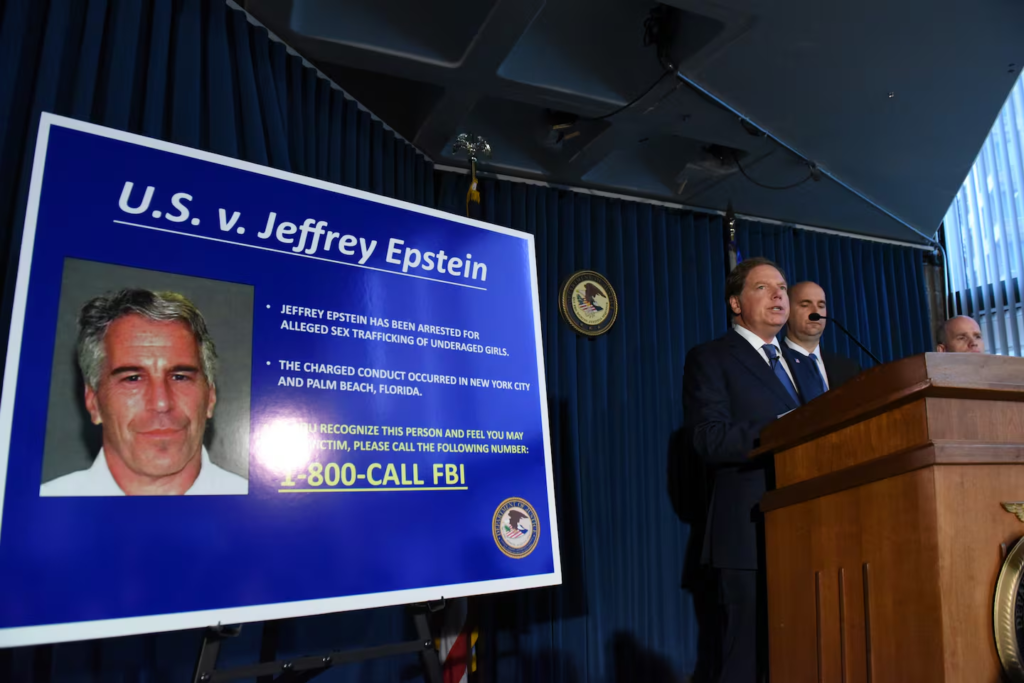
Michael Wolff explained what was really going on with Jeffrey Epstein’s relationship to Israel.


Author Michael Wolff argues that the alleged ties between Jeffrey Epstein and Israeli intelligence services are not quite what they first appear to be.
In the latest installment of his Substack series “The Epstein Diaries”—titled “HOWL“—Wolff writes that, while he acknowledges the true scope of the notorious sex offender’s intelligence activities, he maintains that Epstein was not necessarily a Mossad agent.
“I can state that Epstein was not an Israeli spy—certainly not in the sense understood in John le Carré novels, that is, the type of agent linked to the ‘Deep State’ or someone with divided loyalties,” the author wrote.
Wolff began his article by highlighting the prevalence of rumors that Epstein acted as an informant for Israeli intelligence—rumors that have reached the highest levels of government; Vice President-elect J.D. Vance, for instance, appeared receptive to this idea during his appearance on The Joe Rogan Experience podcast earlier this month.
Vance, 41, said of Epstein: “He obviously had ties to the highest echelons—the very top echelons—of U.S. intelligence… and he obviously had ties to the highest echelons of Israeli intelligence.”
However, Wolff noted that the Vice President-elect was “expressing a MAGA-style conspiracy theory about Epstein, as well as a more specific notion that the Israelis were seeking to destabilize the United States.” The author wrote: “Epstein wouldn’t have really minded being taken for a spy; “In fact, he might have found it amusing,” he said, adding that he would also have viewed such an idea as “a very naive perspective regarding money, loyalty, and information.”
He stated: “The global intelligence economy—or the ‘gossip’ economy, so to speak—has long since surpassed the official global intelligence community in both scope and depth.”

Wolff described how Epstein operated more like a kind of “postmodern spy,” whose vast fortune relied on the exchange of information among the elite “players” who determine power dynamics and social status.

The author continued: “Part of Epstein’s strategy—or his marketing genius, if you will—was to make others believe his information was far more valuable than it actually was,” adding: “Everyone involved in this game of information exchange oversold the quality of their intelligence and their access to it.” Wolff noted that the “simpler, more mundane reality” regarding Epstein’s ties to Israel lay in his friendship with former Israeli Prime Minister and general Ehud Barak.
The author explained that after Barak stepped down as Prime Minister in December 2000, “he needed friends—and, fortunately for him, wealthy friends.” He added: “At the same time, the status and authority he retained, along with the free time he now had, were attractive and useful to Epstein.”

He continued: “Both Barak and Epstein projected the image of important, highly informed men—far beyond the reality; a posture that held great value for both of them… but was, nonetheless, merely a posture.”
Wolff believed that Epstein’s connection to Israel was something “imposed” upon him rather than the result of a genuine desire, given that his primary contact—Barak—was isolated from the country’s “true centers of power,” and that “Israelis were not the sort of Jews he was used to moving among or felt comfortable with.”
He added: “Perhaps the strongest argument against the espionage theory is Epstein’s inability to keep a secret; he loved sharing what he knew and took pleasure in possessing information that allowed him to exaggerate and embellish reality. Epstein liked knowing that his friends and supporters believed he was privy to inside information. Often, he was, but the mere act of convincing you that he knew was enough.”
Wolff concluded: “Epstein was not a spy. He was a storyteller—admittedly not always a reliable one—whose widely circulated narrative portrayed a man who wanted people to believe he knew everything.” He added: “He was more akin to a ‘reverse double agent’: he wanted you to believe he might be a spy for Israel so that you would put stock in everything he said.”