
‘60 Minutes’ Exposes Shock Scale of Trump’s War Humiliation
The show revealed the true extent of the president’s military mishap.

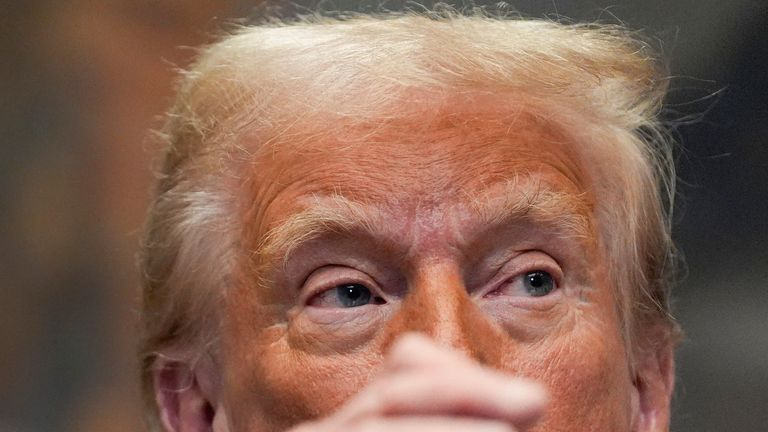
60 Minutes has pulled back the curtain on the true scale of devastation wrought by Donald Trump’s war on Iran.
In Sunday’s episode, CBS News anchor Norah O’Donnell explained that Iran has targeted at least 31 U.S. military and diplomatic sites across the Middle East since the beginning of this war, which was initiated by Trump in February. This claim is based on videos and the network’s own analysis of satellite imagery.
For its part, the U.S. Department of Defense (the Pentagon)—under the leadership of Secretary of Defense Pete Hegseth—has acknowledged only a few attacks on American bases during this conflict, which has been ongoing for about nine months. Consequently, it is difficult for the American public to accurately gauge the scale of the damage inflicted by Iran.
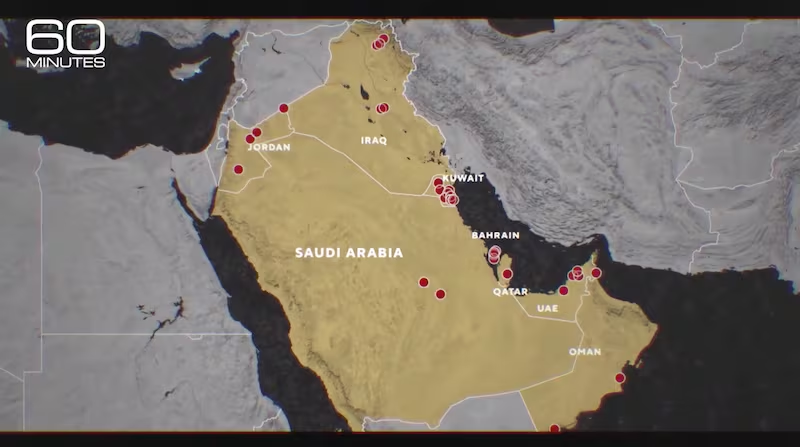
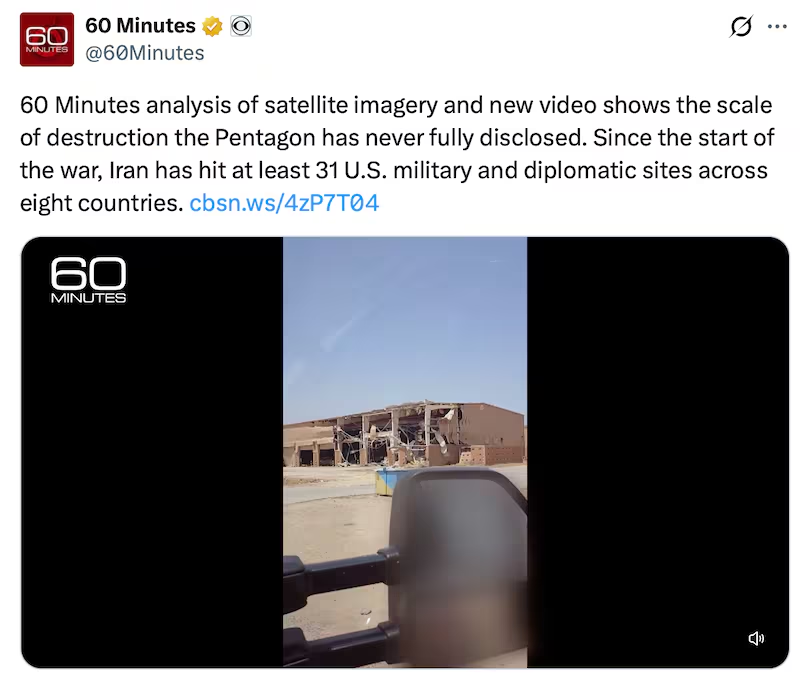
“Our analysis of satellite imagery and new video shows the scale of destruction the Pentagon has never fully disclosed,” O’Donnell said. “Since the start of the war, Iran has hit at least 31 U.S. military and diplomatic sites across eight countries, damaging hundreds of buildings and structures—from Saudi Arabia, to Kuwait, to Bahrain, where the headquarters of the U.S. Navy’s Fifth Fleet was destroyed.”
O’Donnell added that although Trump claimed the war had ended on April 1, the exchange of strikes between the two sides continued for months afterward. On Sunday, Iran’s Islamic Revolutionary Guard Corps launched six drones toward a U.S. air-defense radar facility in Bahrain. According to the BBC, the U.S. military stated that the aircraft were shot down “before they could reach their targets.”
Based on the Pentagon’s official database, 23 American soldiers have been killed and more than 800 others wounded since the conflict began.
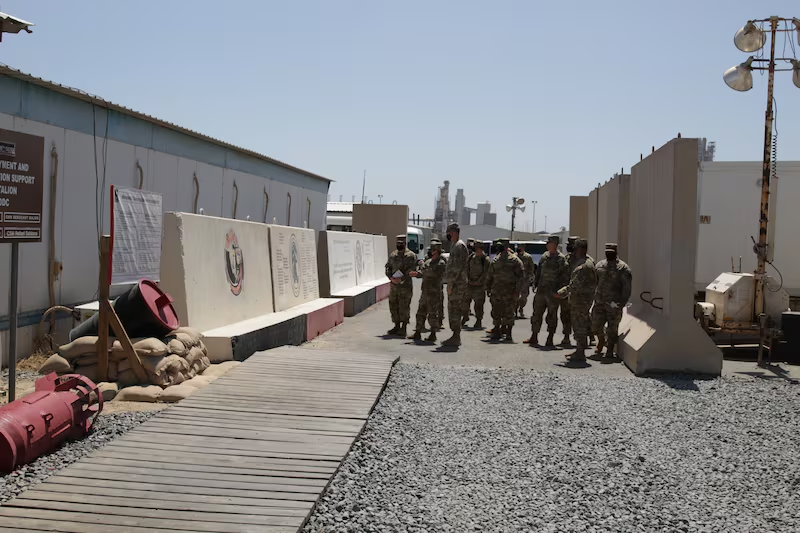
The Department of Defense has only publicly acknowledged incidents that resulted in a significant number of casualties—such as the Iranian strike on March 1 against a U.S. base at the port of Shuaiba, Kuwait, which claimed the lives of six American soldiers.

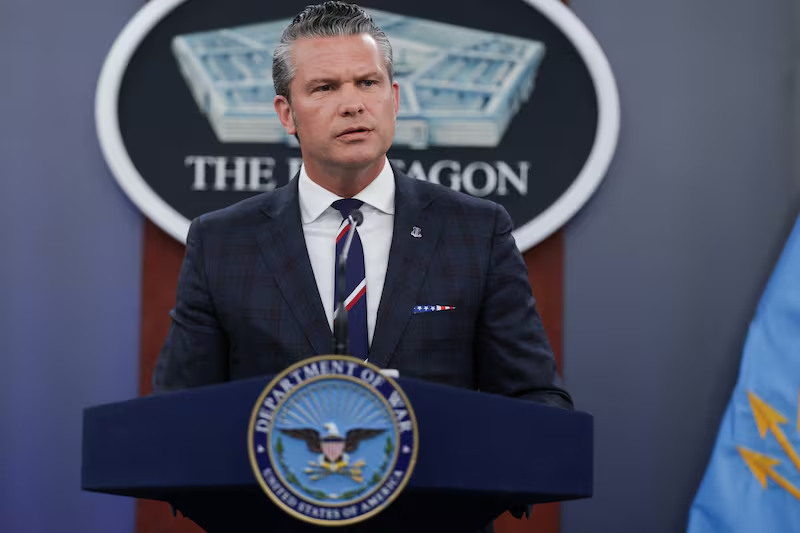
In the aftermath of this missile attack—the deadliest for U.S. forces in the conflict to date—Hegseth described the incident to reporters as an isolated incursion (a “squirter”) that managed to bypass air defenses and strike what he characterized as a “fortified” tactical operations center.
However, Commander Stephen Ramsbottom, who survived the Iranian attack, asserted that the fortifications at the military operations center were inadequate.
In a statement to the program “60 Minutes,” Ramsbottom declared: “In my opinion, this was a tactical failure on the part of the military and our command, but also on my part—at every level, including my own.” He added: “We did not plan the operation well; this must serve as a lesson for us.”
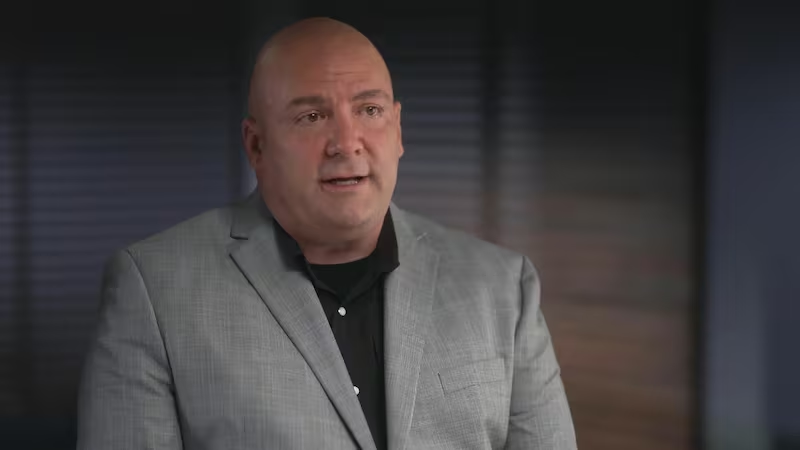
The seasoned officer filed a complaint with the House and Senate Armed Services Committees, accusing the military command of being responsible for the deaths of six of his fellow soldiers.
In this complaint—a copy of which was obtained by CBS News—Ramsbottom states that senior military officials ignored concerns regarding the weakness of the fortifications. He points out that the command center at the port of Shuaiba had neither a doctor nor a permanent medical station, and possessed only a single ambulance.
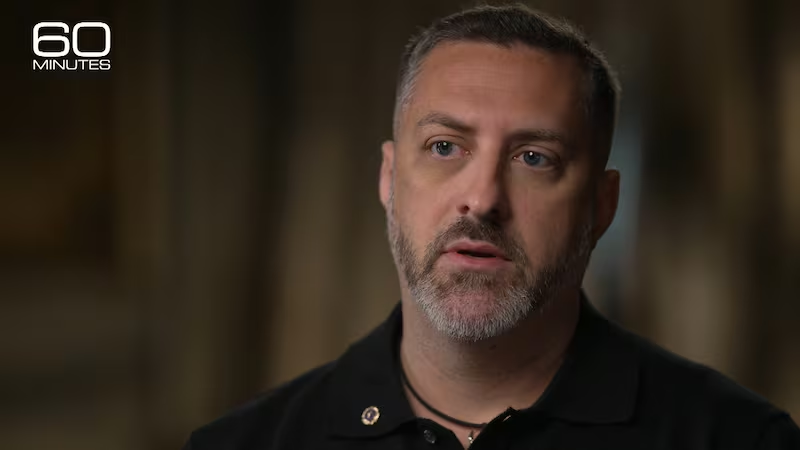
For his part, Joey Amor—husband of Staff Sergeant Nicole Amor, who was killed during the attack on the port of Shuaiba—went even further in his criticism of the Pentagon command.
Speaking on the program “60 Minutes,” Amor stated: “To be frank, the responsibility lies with them. They caused the death of my wife and the deaths of those soldiers. And this isn’t about politics.” He added:“If I’m being frank, it’s—it’s on them. They killed my wife,”
Trump, 80, acknowledged that his unpopular war against Iran had contributed to the historic defeat suffered by his party in the midterm elections, while maintaining that the conflict was necessary.
The president asserted repeatedly that he would make the decision to attack Iran again if it meant preventing the country from acquiring nuclear weapons.
Last week, Trump told reporters that the conflict was “virtually over” and that the United States was now simply maintaining the “status quo,” at the request of its allies in the Persian Gulf region.
He also falsely claimed during a pair of interviews on Thursday that no U.S. troops had been killed during the past five months, despite at least four American service members having died in July alone.
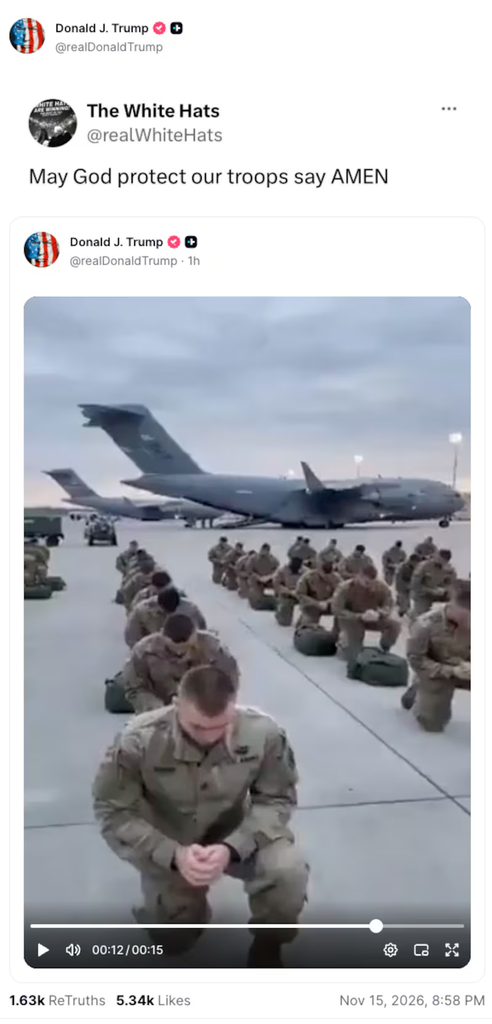
On Sunday evening, the president posted a video on the platform “Truth Social” showing American soldiers praying together, accompanied by the caption: “May God protect our soldiers… Say amen.” It later emerged that this video had been generated by artificial intelligence.