
Republicans Breaking With Trump Over Jensen Huang’s Nvidia Return—Full List
Which Republicans Are Challenging Trump Over Nvidia?

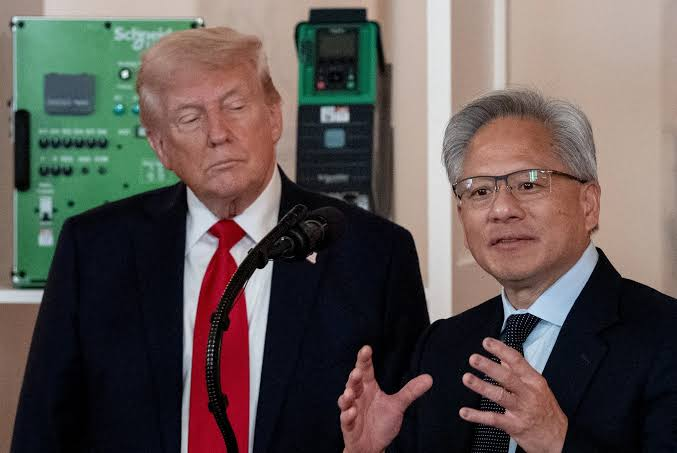
Republican lawmakers are challenging President Donald Trump’s intervention in Nvidia’s decision to reinstate Jensen Huang as CEO, questioning the administration’s national security assurances and demanding answers about the company’s response to allegations of Chinese intelligence activity.
Representatives Don Bacon and Bill Huizenga, along with Senators John Cornyn and John Curtis, have publicly expressed disagreement with certain aspects of Trump’s stance. Don Bacon explicitly opposed Jensen Huang’s return, while the others raised concerns regarding Trump’s assessment of the espionage allegations, the security guarantees put forward by the government, and the decision-making process within the company’s board of directors.
These criticisms follow a personal intervention by Trump aimed at securing Jensen Huang’s return; he persuaded Nvidia’s board of directors to reverse its initial decision regarding the company’s long-time leader.
Why It Matters
The Republicans’ objections reveal divisions over how Trump handled this controversial matter, which concerns one of the most strategically significant technology companies in the United States.
Nvidia dominates the market for advanced chips used in artificial intelligence, placing the firm at the center of Washington’s efforts to block China’s access to sensitive U.S. technologies—technologies that could be used to bolster Beijing’s military and intelligence capabilities. Huang had resigned on November 12 following the disclosure of extramarital affairs, including one with Alice Huang, a former executive at the Singapore-based company “Megaspeed,” which is suspected of having ties to Chinese intelligence services.
Nvidia’s board of directors indicated on Monday that senior U.S. government officials had provided input supporting the board’s conclusion that Huang’s return poses no risk to national security. However, an independent investigation—aimed at determining whether the executive may have been targeted for compromise by foreign intelligence services—remains ongoing.
Nvidia announced on Monday that its board of directors had voted unanimously to reinstate Huang as CEO, president, and a member of the board, following discussions that convinced the members of his sincerity and leadership capabilities.
The company stated: “During the decision-making process, the board sought input from senior U.S. government officials; based on this, the board is confident that Mr. Huang’s return does not pose any risk to national security.”
The news outlet Semafor reported on Monday that Trump personally participated in the board’s deliberations by phone to advocate for Huang’s return. Trump later told CNBC that he had spoken with members of the Nvidia board and persuaded them to reinstate Huang to his position.
The White House confirmed Trump’s involvement in the matter. Steven Cheung, the White House communications director, told Newsweek earlier on Monday—in the context of an article about Nvidia—that “President Trump was fully involved in this matter; it is an excellent decision by the Nvidia board. We must protect our geniuses.”
Trump also praised the decision on the platform Truth Social, describing Huang as a “great patriot” and a “national treasure.” However, several Republican lawmakers have questioned whether the administration and Nvidia have sufficiently addressed national security concerns surrounding Huang’s relationship with a woman suspected of working for Chinese intelligence services.
Which Republicans Are Challenging Trump Over Nvidia?
Don Bacon, Nebraska Representative
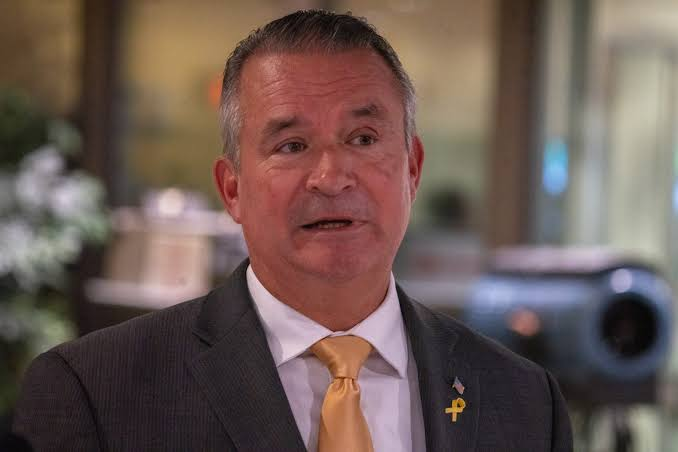
Bacon has leveled one of the harshest criticisms from within the Republican camp regarding Trump’s intervention, arguing that Nvidia should have replaced Huang rather than reinstating him at the helm of the company.
In a post on the platform X on Monday, Bacon wrote: “Jensen Huang fell under the influence of a Chinese spy, who was able to take advantage of the situation.”
He added: “Nvidia should have moved forward without Huang, and disregarded the administration’s—inexplicable—desire to save him.”
Furthermore, Bacon has called for a congressional investigation into the decisions that allowed China to gain access to advanced American semiconductor technologies.
“Congress must get to the bottom of who authorized the sale of cutting-edge computer chips to China,” he wrote. “We cannot claim to want to win the artificial intelligence race while handing over our best technology to China. Those responsible must be identified.”
These criticisms stand in stark contrast to Trump’s position, as he viewed Huang’s return to his post as the most sensible outcome—both for Nvidia and for the United States.
It should be noted that Bacon’s allegation—that Huang was under the influence of a Chinese spy—is not supported by any publicly available evidence; moreover, the Chinese government has denied that Alice Huang is a spy.
John Cornyn, Texas Senator
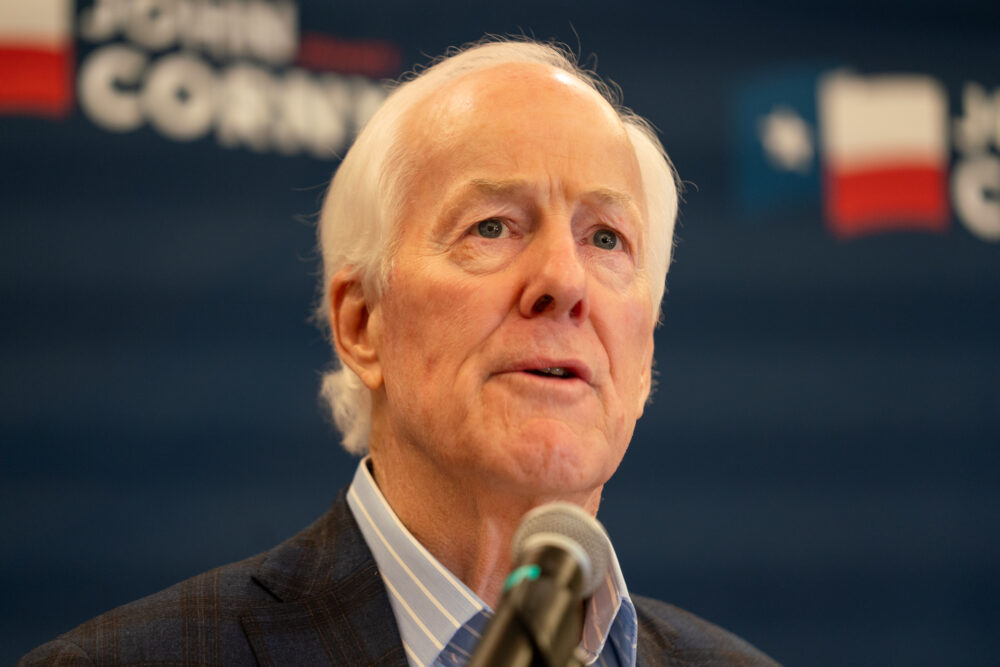
Cornyn questioned the national security risk assessment conducted by Nvidia, shortly after the company announced Huang’s return.
In a post on the platform X on Monday, the Republican senator from Texas asked: “No national security risk? On what basis?” He was responding to a statement from the company claiming that it had consulted with senior U.S. government officials.
Cornyn also raised the question of whether federal authorities had warned Huang about a suspected Chinese intelligence operation.
In another post, Cornyn wrote: “I repeat my question: Did the FBI provide a warning to Huang? If not, why? And if they did, what was he told about these risks? Did he ignore them?”
Subsequently, Cornyn expanded his concerns to include Nvidia’s internal control mechanisms.
In this regard, he wrote: “There are also many questions regarding corporate governance.”
Cornyn did not explicitly call for Huang’s departure; rather, his questions focused on what the government and the executive knew about the suspected intelligence threat, and how Nvidia reached its decision before the investigation had even been completed.
John Curtis, Utah Senator
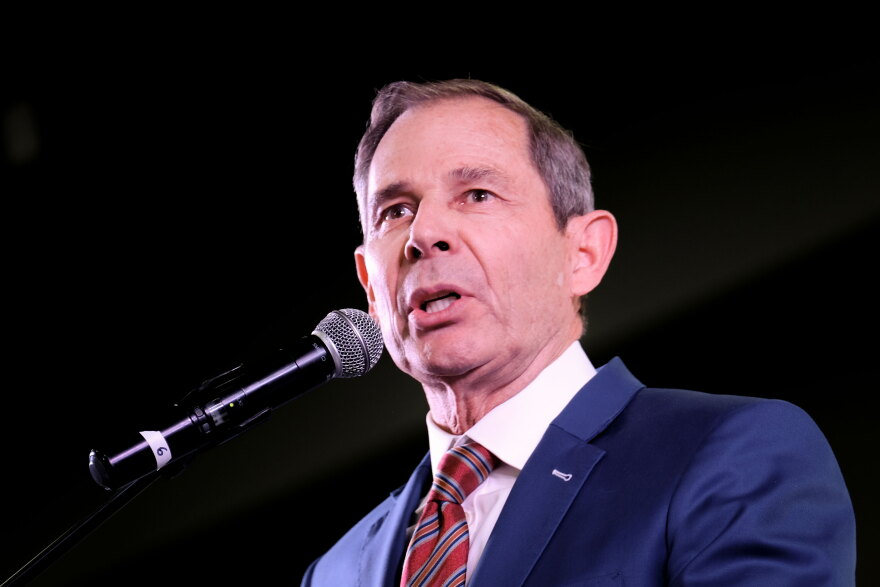
Curtis expressed doubts regarding both the U.S. administration’s claims concerning national security and the sudden reversal by Nvidia, which backtracked on its initial decision not to reinstate Jensen Huang to his position.
In a post on the platform X this Monday, Curtis wrote: “Nvidia’s board of directors claims to have relied on the advice of senior U.S. officials in concluding that Jensen Huang’s return poses no national security risk. I have a few questions about that.”
He added: “Which officials within our government provided this advice? What did they tell the board? And on what basis did the board conclude that there is no risk whatsoever?”
Curtis also criticized the timing of Mr. Huang’s return.
The Republican representative from Utah wrote: “Mr. Huang’s resignation, at the time the matter came to light, was the right decision.”
He continued: “Just 11 days after announcing his departure, Nvidia’s board reinstated him—even while the board’s own independent investigation was still underway. Yet, just last week, the board stated that it had no intention of bringing him back; I would therefore like to know what has changed.”
Bill Huizenga, Michigan Representative
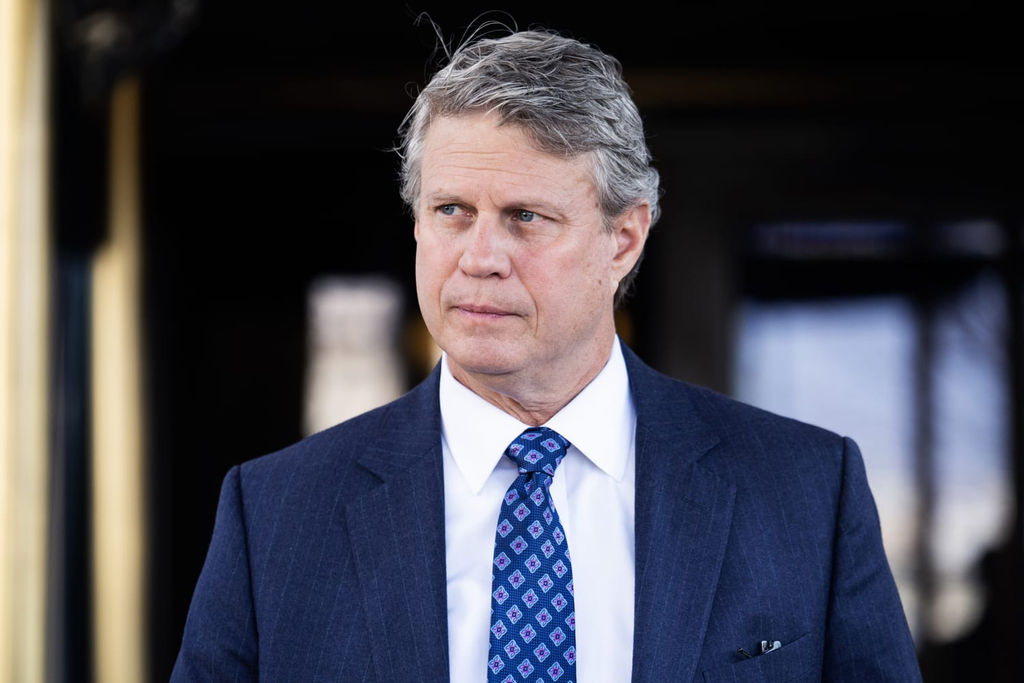
Huizenga directly challenged Trump’s questioning of whether Alice Huang might be working for Chinese intelligence services.
On Sunday, Trump urged the board of directors at Nvidia to reinstate Huang, arguing that her return would serve the interests of both the company and the United States.
In response to a post highlighting the former president’s intervention, Huizenga wrote on the platform X:
“Hmm… She was, and remains, a spy.”
The Republican representative from Michigan also questioned how the export of U.S. technology to China is being managed.
He asked: “How about we take this seriously and ensure that China isn’t stealing technology from American companies? Or how about we stop selling them this technology altogether—whether directly or indirectly?”
Huizenga’s remarks stand in contrast to Trump’s repeated skepticism regarding allegations of espionage.
On November 16, Trump told reporters: “I don’t know if she’s a spy. I really don’t know.”
Huizenga did not explicitly oppose Huang’s return to her position; rather, his criticism focuses on Trump’s assessment of her alleged ties to Chinese intelligence, as well as the broader risks associated with China’s access to advanced American technology.
The New York Times reported that, according to U.S. intelligence, China’s Ministry of State Security allegedly recruited Alice Huang to gather information on an Nvidia executive and potentially influence the company’s stance regarding the sale of advanced computer chips to China. No public evidence has been presented to demonstrate that Jensen Huang deliberately assisted Chinese intelligence services, nor that Alice Huang influenced Nvidia’s business decisions or U.S. export policy.
Conservative commentators criticize Trump’s interference in Nvidia’s affairs
The criticism was not confined to the halls of Congress; conservative commentators and former media figures also raised questions regarding Trump’s interference and Nvidia’s decision to reinstate Huang.
Bill Kristol, a conservative commentator and vocal critic of Trump, demanded that the company disclose the identities of the government officials who provided assurances that Huang would not pose a national security threat.
On Monday, writing on the platform X, Kristol stated: “The board of directors must be asked: which senior U.S. government officials assured them that Huang did not pose a security risk?”
More specifically, Kristol questioned whether Secretary of State Marco Rubio, CIA Director John Ratcliffe, and other top national security officials shared this assessment. Gordon G. Chang, a conservative author and expert on Chinese affairs, offered an even sharper critique.
“Nvidia’s board has reinstalled Jensen Huang as CEO. America has fallen,” Chang wrote on X.
Meanwhile, Geraldo Rivera, a former Fox News host, pointed out that Trump’s influence was the decisive factor that led to the reversal of the board’s initial decision. Rivera wrote on the platform “X”: “Jensen Huang’s return as CEO of Nvidia is irrefutable proof that there are individuals who are ‘too important to be ousted,’ even when they have engaged in reckless behavior. Trump imposed his will by force, crushing everything in his path.”
Conservative writer David French also criticized the decision, viewing it as a symbol of a decline in accountability.
“This is the perfect embodiment of the Trump era: accountability has ceased to exist,” French wrote on “X.”
What did Trump say about Jensen Huang’s return?
Trump has defended Huang repeatedly, asserting that his return to the helm of Nvidia was essential for the company’s future, as well as for the technological competitiveness of the United States.
On Sunday, Trump urged Nvidia’s board of directors to reinstate Huang, calling this outcome the “best possible solution” for both the company and the United States.
Following the announcement of the decision on Monday, Trump congratulated the members of the board.
“Congratulations to Nvidia for making what I consider to be an absolutely great decision!” he wrote on “Truth Social.”
Furthermore, Trump claimed that the government had no evidence suggesting that Huang had been involved in illegal activities, nor that her return to her position would pose a threat to national security.
In an interview with CNBC on Monday, Trump acknowledged having communicated with Nvidia’s board of directors, either directly or indirectly.
“I convinced them,” he stated. He also confirmed that board members had requested assurances regarding potential national security risks, and that management had provided those assurances based on the information at its disposal.
The president had questioned, on several occasions, whether Alice Huang was working for Chinese intelligence services.
On November 16, Trump told reporters: “I don’t know if she’s a spy or not; I really don’t know.”
What is the next step for Jensen Huang and the national security inquiries involving Nvidia?
Huang’s return to his position does not put an end to the investigations targeting Nvidia.
This return has not altered Congress’s intention to question him; a spokesperson for the House Intelligence Committee told NBC News on Monday that the three committees involved are continuing their investigation into national security concerns surrounding Nvidia.
On Monday, the company stated that an independent committee—tasked with investigating a potential attempt by foreign intelligence services to target Huang—has retained external legal counsel and will continue its work until completion. Huang has pledged to cooperate with this investigation.
Furthermore, Nvidia has established a committee dedicated to national security and export controls, composed entirely of independent board members. The company is also working to create a “Chief Compliance Officer” position to strengthen oversight regarding trade compliance and national security-related risks.
According to an announcement made on November 17 by the Republican chairs of the relevant House committees, Huang is scheduled to appear at a closed-door hearing—for which a record will be kept—on December 1 before three House committees: the Intelligence Committee, the Foreign Affairs Committee, and the Select Committee on the Chinese Communist Party.
He is also set to testify publicly before the Senate Banking Committee on December 3, as announced on Monday by Tim Scott, the committee’s Republican chair. The criticisms raised by Republicans leave two questions unanswered: what information convinced the Trump administration that Huang’s return posed no national security risk? And why did Nvidia’s board of directors reverse its initial decision even before the completion of the investigation conducted by the company itself?