
SCOTUS Justices Poised to Block Trump’s Fed Power Grab
The Supreme Court heard arguments on the president’s attempt to fire Governor Lisa Cook.

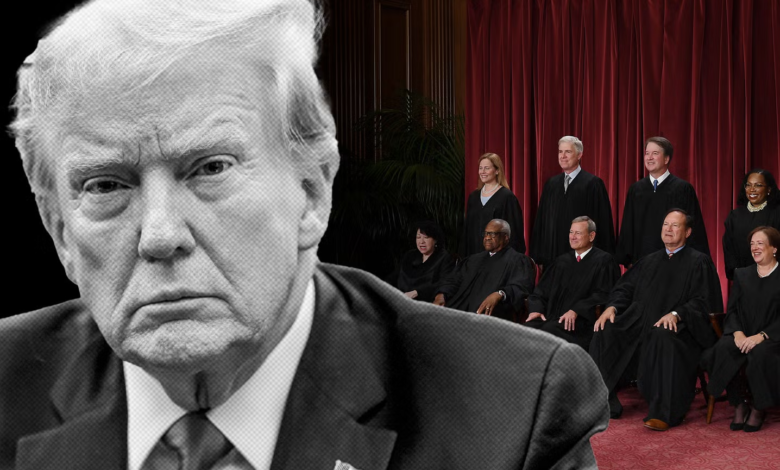
The U.S. Supreme Court appeared to seriously question the legality of President Donald Trump’s dismissal of Lisa Cook from the Federal Reserve.
The nation’s highest judges heard arguments before issuing a ruling that could have significant implications for the president’s powers and the independence of the Fed.
The case stems from Trump’s attempt last August to remove the Democratic-appointed member of the Board of Governors, accusing her of mortgage fraud, in an effort to pressure the Fed.
The president has repeatedly attacked Federal Reserve Chairman Jerome Powell, demanding that the independent central bank lower interest rates. This month, the Justice Department subpoenaed Powell as part of its own investigation.
Both Cook and Powell have denied any wrongdoing.
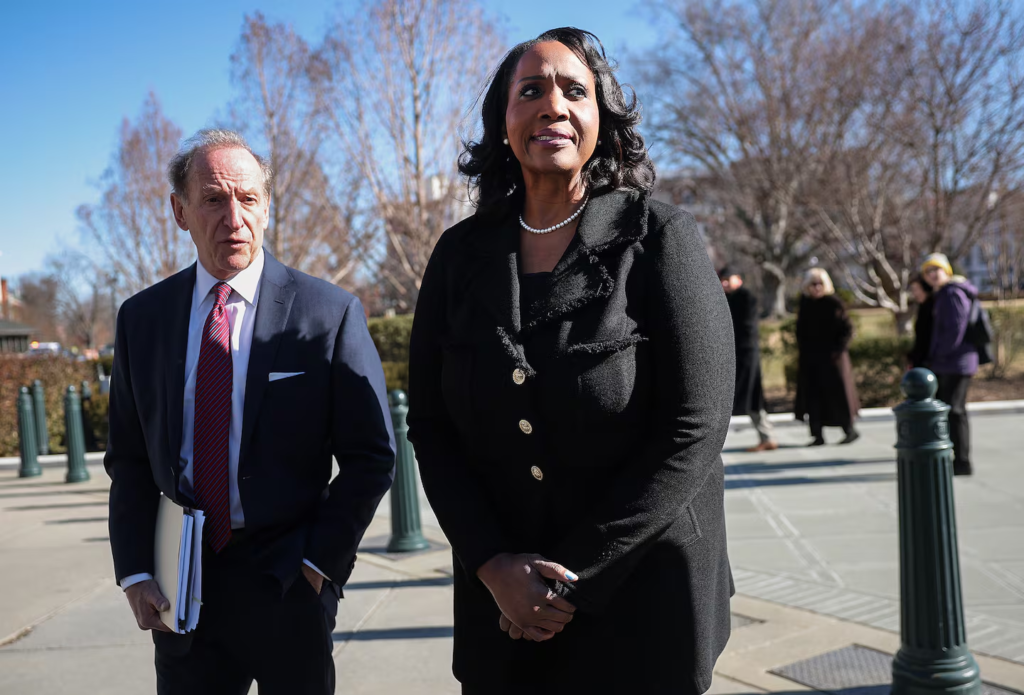
The case before the Court on Wednesday centered on whether Trump’s attempt to remove Cook complied with the Federal Reserve Act, which states that members of the Board of Governors can only be removed “for cause.”
Lower courts had temporarily blocked Cook’s removal, leading the case to the Supreme Court.

In October, the Supreme Court allowed Cook to temporarily remain in her position. It must now decide whether she can remain on the Federal Reserve Board of Governors for the duration of the proceedings.
Attorney General D. John Sauer argued that the allegations of mortgage fraud met the “for cause” standard allowing Trump to remove Cook. Her lawyer, Paul Clement, argued that even if the allegations of mortgage fraud were true, they did not constitute grounds for dismissal, as she had applied for these mortgages before her appointment by President Joe Biden in 2022.
On Wednesday, even conservative justices questioned the president’s power to remove a member of the Board of Governors and raised doubts about the relevance of the unproven allegations against her, while Cook and Powell watched the proceedings from the public gallery.
Chief Justice John Roberts asked the justices how they viewed the president’s accusations against Cook, stating, “So, it doesn’t matter whether it was an innocent mistake or a fraudulent scheme to get a better interest rate, does it?”
Justice Amy Coney Barrett also expressed doubts about whether the accusations against Cook were serious enough to warrant her dismissal, as well as the economic consequences of such a removal.
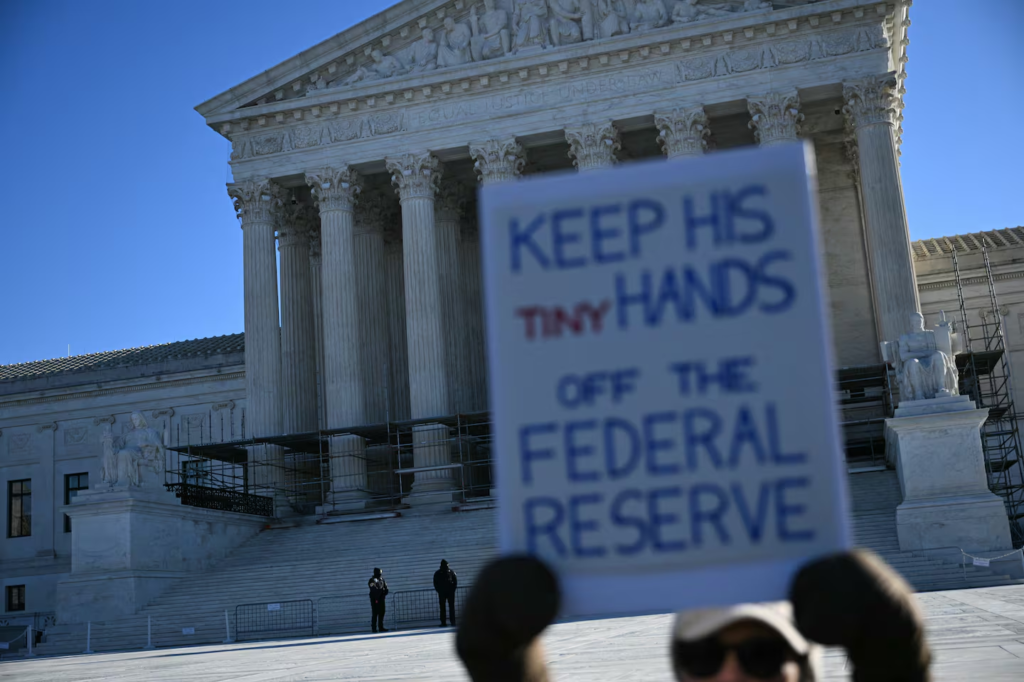
Faced with repeated attacks from Trump, economists and business leaders have emphasized the importance of the Federal Reserve’s independence in making decisions free from political pressure.
Another conservative justice, Samuel Alito, questioned the need to resolve the case so quickly, suggesting he feared the accusations against Cook would not receive thorough scrutiny.
Justice Brett Kavanaugh also posed a series of pertinent questions to Sauer regarding the Fed’s independence.
The Solicitor General argued on Wednesday that the president has the power to determine what constitutes sufficient grounds for dismissal and that this power is unquestionable. However, Kavanaugh asserted that the administration’s position would weaken, or even compromise, the Fed’s independence.
He noted that history repeats itself, adding, “It is likely that all officials appointed by the current president will be removed for legitimate reasons on January 20, 2029, if a Democratic president is elected, or on January 20, 2033. We will then have a system of arbitrary removal.”
No president, since the creation of the Federal Reserve in 1913, had attempted to remove a member of its board of governors before Trump.
The Supreme Court is expected to issue its decision in the coming weeks or months.