
Trump Hit by Brutal Reality Check on Domestic Cost of War
The president’s affordability crisis has suffered yet another setback.

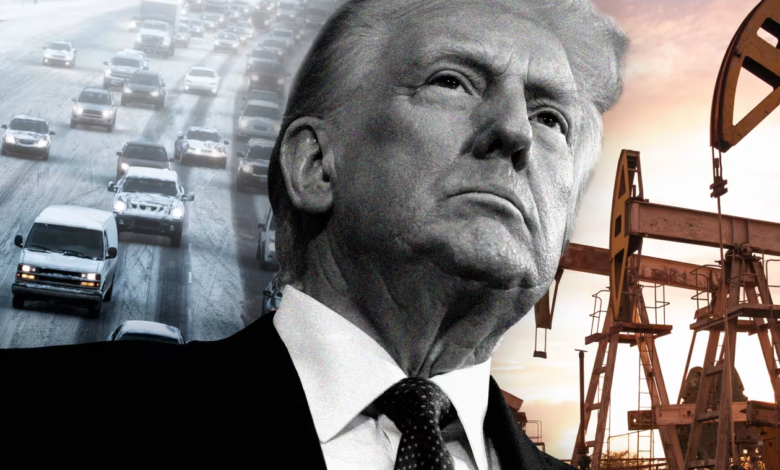
President Donald Trump’s war against Iran has weakened two pillars of his reelection campaign.
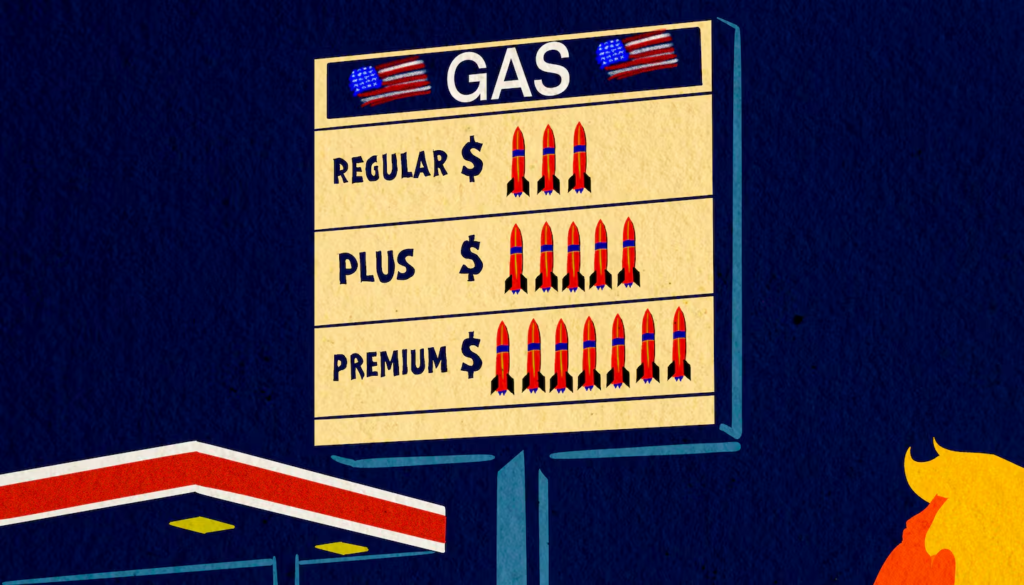
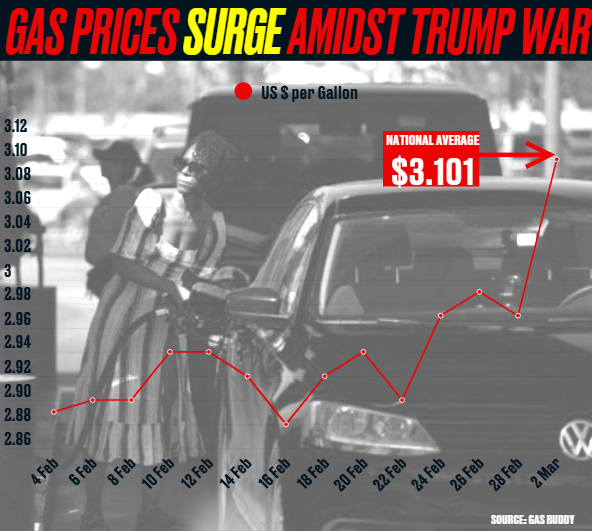
Fuel prices jumped 12 cents a gallon on Monday, the largest daily increase in three years, according to Gas Buddy, as markets plummeted.
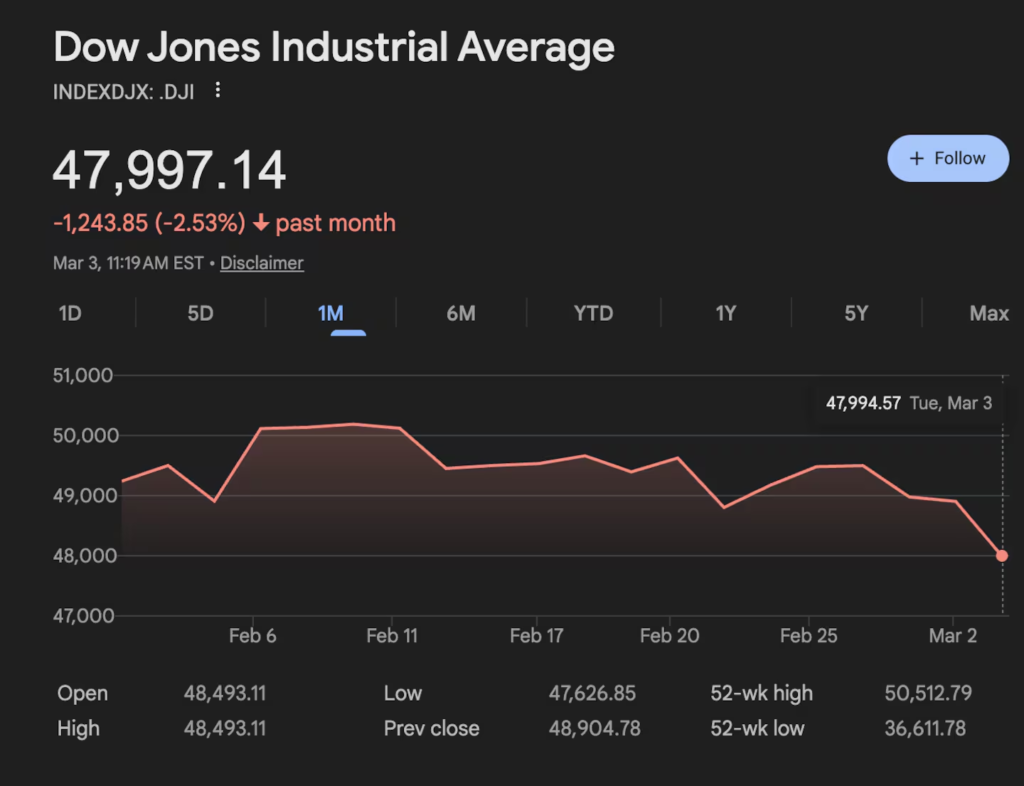
The Dow Jones Industrial Average fell 1,100 points Tuesday morning, while the S&P 500 and Nasdaq Composite declined 2.5% and 2.3%, respectively. The Wall Street Journal commented on the drop: “The index is on track for its biggest daily decline since last April, when markets were rattled by President Trump’s imposition of massive tariffs on U.S. imports.”
Oil prices also rose sharply, already contributing to the increase in fuel prices in the United States.
This sharp increase, following the attacks, means that the price of gasoline in the United States, which averages $3.11 per gallon, is now higher than it was a year ago. Tuesday also marked the first time since November that the average price of gasoline exceeded $3 per gallon.
Patrick de Haan, head of oil analysis at GasBuddy, believes prices will continue to rise due to the ongoing conflict in the Middle East, which has already claimed the lives of six American service members.

He points out that this price surge is directly linked to the instability of the Strait of Hormuz, the only maritime passage between the Persian Gulf and the Pacific Ocean, which separates Iran from the United Arab Emirates and Oman.
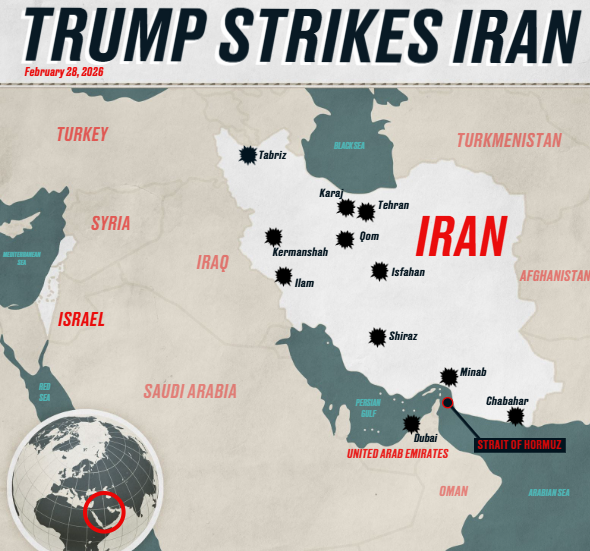
“If tanker traffic is severely disrupted, prices could climb even higher,” he wrote on the Substack platform. “If maritime security stabilizes and shipping returns to normal, some of this risk premium could decrease. But for now, the market reaction is not only underway, but accelerating.”
De Haan doesn’t expect the average price to exceed $4 a gallon, but he anticipates a possible drop to $3.35 soon.
The regions that saw the largest increases in gasoline prices last week were primarily in the predominantly Republican-leaning Midwestern states.
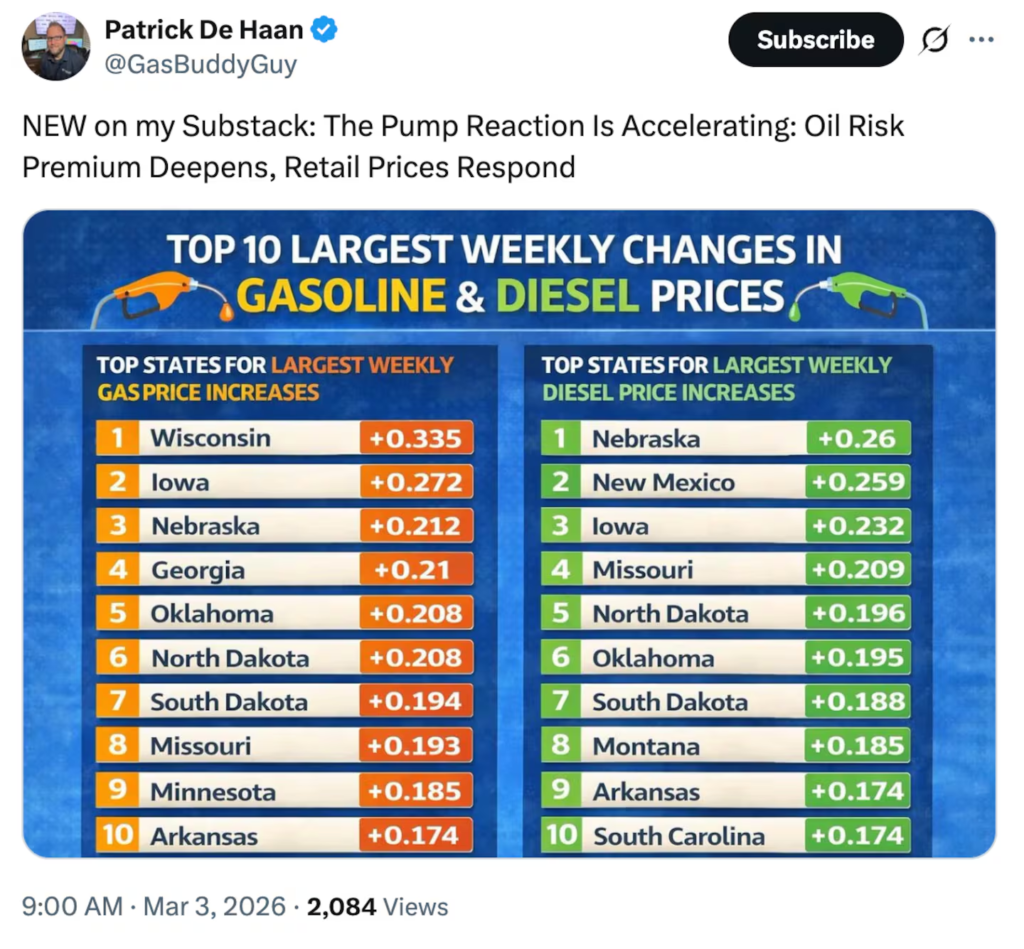
Gas Buddy reported a sharp weekly increase in gasoline prices in Wisconsin, with an average rise of 33 cents per gallon. Iowa, Nebraska, Georgia, Oklahoma, South Dakota, North Dakota, Missouri, Minnesota, and Arkansas also saw significant increases. With the exception of Minnesota, Trump won all of these states in the 2024 presidential election.
The average price of a gallon of gasoline nationwide was $3.09 on March 3, 2025, a month and a half into Trump’s second term. This is a far cry from the rare instances of prices below $2 a gallon that Trump has touted this year, claiming his policies have driven prices down.
In his State of the Union address, the 79-year-old Trump emphasized the limited number of gas stations selling low-priced gasoline—figures that are far removed from the reality for most Americans.
In his now-famous speech last month, Trump said, “Under my predecessor, the price of gasoline spiked to over $6 a gallon in some states, and frankly, it was a disaster.” Today, it has dropped below $2.30 a gallon in most states, and even to $1.99 a gallon in some places.
Trump claimed to have seen gas for less than $2 a gallon during a trip to Iowa in January, while price-tracking companies at the time indicated that fewer than 1% of gas stations were offering that price. During that same trip, his claim was categorically refuted at an event where someone shouted that the actual price of gas in the state was 70 cents higher than Trump’s stated figure.
The White House did not immediately respond to a request for comment regarding the price surge. However, Trump addressed the issue of the increase in the Oval Office on Tuesday, assuring the public that the rise in gas prices would be temporary.
Trump said of his strikes against Iran: “I’ll tell you, I’ve never been praised more for anything I’ve done. People felt it was necessary. So, if we see a slight rise in oil prices for a short period, once that situation is over, prices will fall, and I think they’ll fall to a level lower than before.”