
Ex-CIA Director: ‘25th Amendment Was Written With Donald Trump in Mind’
The explosive remark reignites debate over Donald Trump’s fitness for office, as calls grow to consider the 25th Amendment in extreme circumstances.

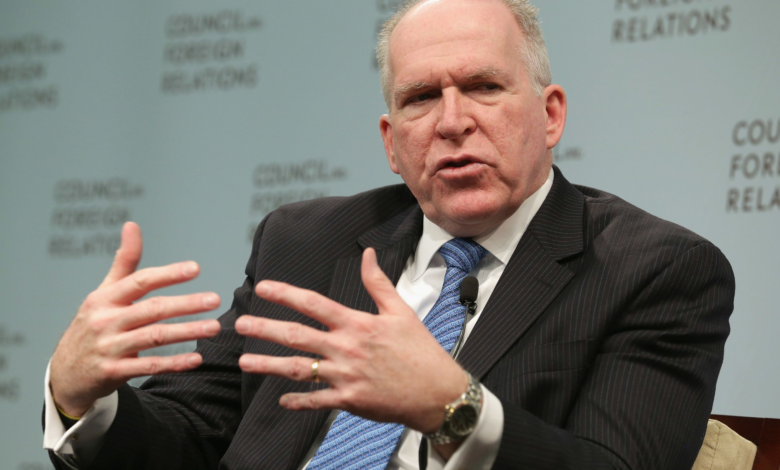
Former CIA Director John Brennan stated that President Donald Trump’s recent rhetoric and actions regarding the conflict with Iran raise serious questions about his fitness to remain in office as Commander-in-Chief, noting that the 25th Amendment to the Constitution was specifically designed to address such situations.
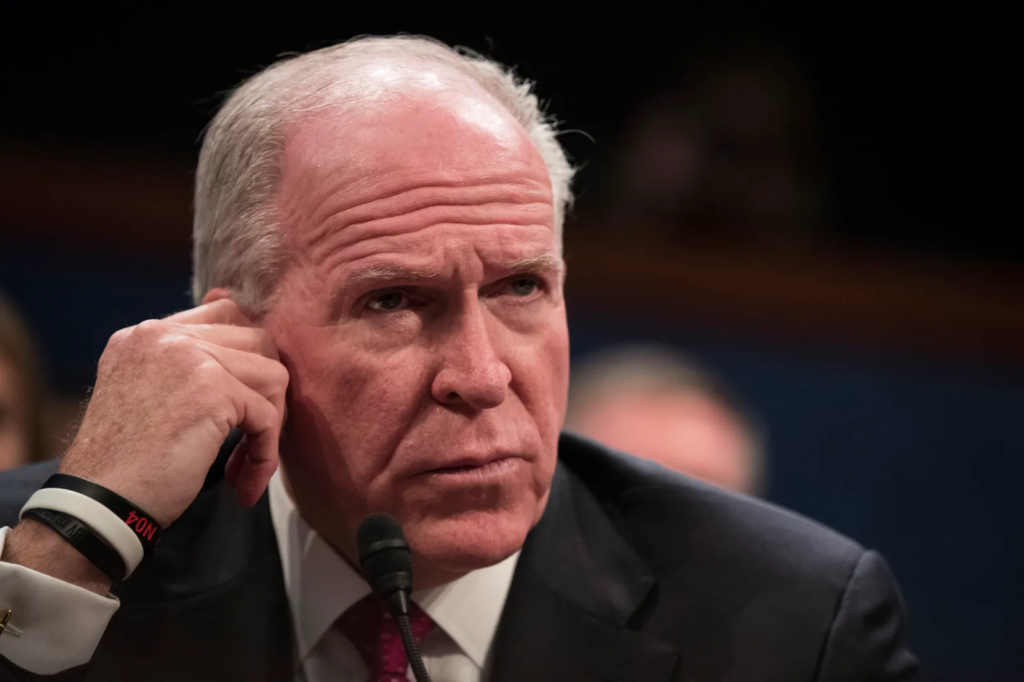
During an appearance on the program “MS Now” on Saturday, Mr. Brennan criticized Mr. Trump’s rhetoric toward Iran, as well as the potential consequences of a war. He warned that the President’s conduct—coupled with his absolute control over U.S. military and nuclear capabilities—represents a dangerous convergence of absolute power and instability.
Calls to invoke the 25th Amendment against Mr. Trump have intensified following his threats against Iran and his comments alluding to the potential destruction of an entire civilization, thereby reigniting the debate regarding the limits of presidential power and a president’s accountability in times of war.
Why It Matters
The 25th Amendment was enacted to address instances of presidential incapacity; however, it has rarely been invoked in the context of the conduct of a sitting president engaged in actual military conflict. Mr. Brennan is reframing the concept of this amendment, presenting it not merely as a mechanism of last resort for presidential succession planning, but rather as a safeguard and bulwark against what he views as a reckless exercise of command authority.
This debate has taken on a heightened sense of urgency as the United States confronts growing regional instability in the Middle East. Mr. Brennan referred to reports indicating that American soldiers had been killed amidst the ongoing clashes, as well as to the diplomatic efforts currently underway to contain the conflict.
While Democrats have been at the forefront of many calls to invoke this amendment, some Republicans and conservative commentators have also voiced their concerns regarding the matter, thereby contributing to an unusual bipartisan debate concerning the limits of executive power in times of crisis.
What to Know
Mr. Brennan served as Director of the Central Intelligence Agency (CIA) from 2013 to 2017 under the presidency of Barack Obama, following a career spanning over 30 years in the fields of intelligence and national security—a career that notably included his tenure as Obama’s principal counterterrorism advisor.
Brennan drew attention to remarks made by Trump on Tuesday, in which the latter threatened to “obliterate an entire civilization,” asserting that such language underscores the dangers of unfettered executive power. He added: “Allowing a person of this type to continue serving as Commander-in-Chief—controlling the immense capabilities of the U.S. military, including our nuclear arsenal—means that we are truly passing through a deeply troubling period.”
The former CIA Director went even further, asserting that Trump is “manifestly mentally unstable” and arguing that the 25th Amendment to the Constitution was, in fact, drafted precisely in anticipation of a leader such as Trump. Brennan warned of the exceptional risks involved in allowing a president of this nature to remain in office as Commander-in-Chief—particularly given the authority Trump exercises over nuclear weapons.
Brennan stated that it is particularly troubling to observe that Trump continues to act with the support of members of his own party who, in his view, have sought to make excuses for his behavior or to justify it, rather than confronting and challenging him.
“The fact that he is able to act in this manner—and that members of his party, as well as his ‘MAGA’ supporter base, continue to downplay, excuse, and justify his actions—is deeply concerning,” Brennan said.
In recent days, a growing number of elected officials and political figures have publicly raised the possibility of invoking the 25th Amendment to the Constitution, citing concerns regarding President Trump’s conduct and rhetoric during the conflict with Iran. Many Democratic lawmakers—notably Representatives Shri Thanedar (Michigan) and Ro Khanna (California)—have called upon Vice President J.D. Vance and members of the Cabinet to take decisive action following Trump’s social media posts, in which he threatened to unleash massive destruction upon Iran. Senators Chris Murphy (Connecticut) and Ed Markey (Massachusetts) have likewise advanced similar arguments in statements posted on social media and during television interviews conducted this week, warning that the language employed by the President amounts to jeopardizing national security.
Some of Trump’s allies and conservative figures have echoed these concerns; former Representative Marjorie Taylor Greene (Georgia)—once one of Trump’s most fervent supporters—publicly called for the invocation of the 25th Amendment on April 5, in a post responding to the President’s rhetoric regarding Iran. Other right-wing commentators—including media personality Alex Jones—have presented similar arguments on their radio programs and online platforms, emphasizing that this amendment was designed to serve as a constitutional safeguard, intended for use when a president is deemed incapable of safely exercising the powers inherent to their office.
Nevertheless, invoking this amendment remains an extremely arduous undertaking, both procedurally and politically. Under Section 4 of the amendment, the Vice President and a majority of the Cabinet must declare that Trump is unable to discharge the powers and duties of his office—a step that has never before been taken against a sitting president.
For his part, despite his scathing criticism of Trump, Brennan expressed cautious optimism regarding the current diplomatic path, noting reports that Vance would be accompanied by an “elite group of government professionals and experts” for the upcoming talks between the United States and Iran, to be held this weekend in Islamabad, Pakistan—discussions aimed at de-escalating tensions.
What Happens Next
Representatives from the United States and Iran are expected to continue their discussions over the coming days, with the aim of consolidating the fragile ceasefire and preventing any further escalation of the ongoing conflict.