
Trump Insiders Reveal Secret Plot for Bigger Takeover Target
The president has his eyes on a new sovereign-state prize.

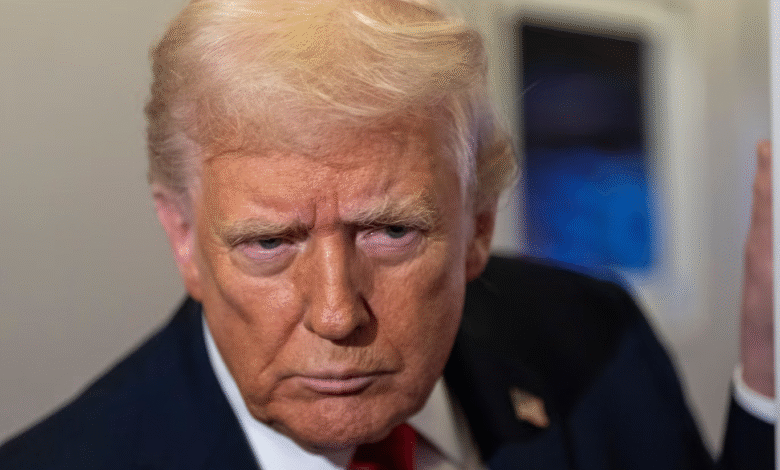
The next stop on Donald Trump’s world tour—or rather, his quest for power—could very well be the United States’ North American neighbor.
The 79-year-old US president has turned his attention to Canada, focusing particularly on vulnerabilities he sees along its northern border that could be exploited by US adversaries such as Russia or China, according to two US officials, a senior administration official, and three former senior US officials interviewed by NBC News.
“They absolutely must strengthen their capabilities in the Arctic,” one of the officials told the network, adding that the situation on Canada’s northern border is “unacceptable given the current threats” and that “the status quo is inadequate.”
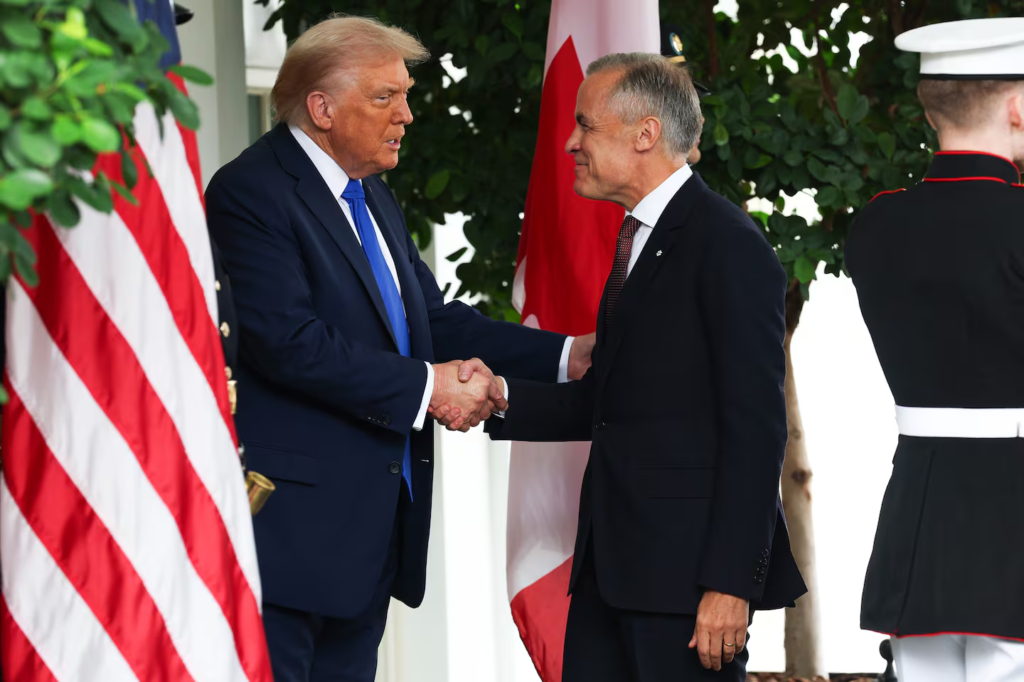
NBC reported that Trump has repeatedly complained about the weaknesses he attributes to Canadian defenses, which has led to discussions with Canadian officials about a broader Arctic security strategy. Among the initiatives that have caught Trump’s attention are strengthening U.S. naval patrols and acquiring additional icebreakers—specialized vessels designed to navigate in icy waters—to operate in or near Canadian waters.
“Trump is very concerned about the continued decline of American influence in the Western Hemisphere, and he is focusing his efforts on this,” an official told NBC.
“Ultimately, it’s about preventing Russia and China from establishing a lasting presence in the Arctic,” the official added.
Canada, with its 9.9 million square kilometers and 40 million inhabitants, is the primary target of Trump’s growing territorial ambitions.

These discussions come as Canadian Prime Minister Mark Carney meets with Chinese President Xi Jinping in Beijing this Friday, a sign of a desire to strengthen ties between the two countries. Carney is the first Canadian leader to visit China since 2017.

According to his advisors, Trump’s interest in Canada is part of a broader strategy to “strengthen” American influence in the Western Hemisphere and is consistent with his aggressive campaign to acquire Greenland, a semi-autonomous Danish territory.
“Canada would benefit from the United States acquiring Greenland,” said an administration official.
On Friday, Carney expressed his support for Denmark joining NATO, stating that Greenland—a territory of about 57,000 people located northeast of Canada—should be able to decide its own destiny.
Trump’s repeated statements that “we desperately need Greenland” for defense purposes have alarmed Denmark, whose leaders have repeatedly warned that they will not relinquish the world’s largest island and that U.S. control of it would spell the end of NATO.
On Saturday, White House Deputy Chief of Staff Stephen Miller said that, “under international law,” a country cannot be annexed if it is unable to defend its own territory. A Trump adviser downplayed the Danish government’s capabilities, claiming its “small” military is incapable of properly protecting Greenland.
“As far as Denmark is concerned, it’s a small country with a small economy and a modest military,” Miller said, referring to Fox News’ Hannity.
“They can’t defend Greenland. They can’t control it.” According to all the laws relating to territorial control established over the past 500 years, to control a territory, one must be able to defend it, develop it, and live in it. Denmark has failed all these tests.
Meanwhile, officials told NBC that the White House had made similar criticisms of Canada, which has increased its defense spending but remains below NATO targets.
“The world does not consider Canada a major military power,” the official told NBC.
Trump had previously stated that it was “very unlikely” he would use military force against Canada. But after his surprise invasion of Venezuela and the kidnapping of President Nicolás Maduro on January 3, the president did not rule out deploying U.S. troops to countries such as Colombia, Mexico (a U.S. ally), and Greenland.