
True Scale of Trump’s Secret Military Disaster Is Revealed
What goes up has a tendency to go down.


A new congressional report reveals that President Donald Trump’s war against Iran has resulted in the damage and destruction of dozens of U.S. aircraft.
Case-proof casualty figures are scarce in this conflict, which has cost the United States billions of dollars, as the Department of Defense has not released a comprehensive tally of aircraft damage sustained during the fighting.
Several major incidents, such as the downing of two piloted F-15E Strike Eagles over Iran, have received widespread media attention, while others have gone largely unnoticed. The Congressional Research Service (CRS) now indicates that the total number of aircraft lost or damaged could reach 42.
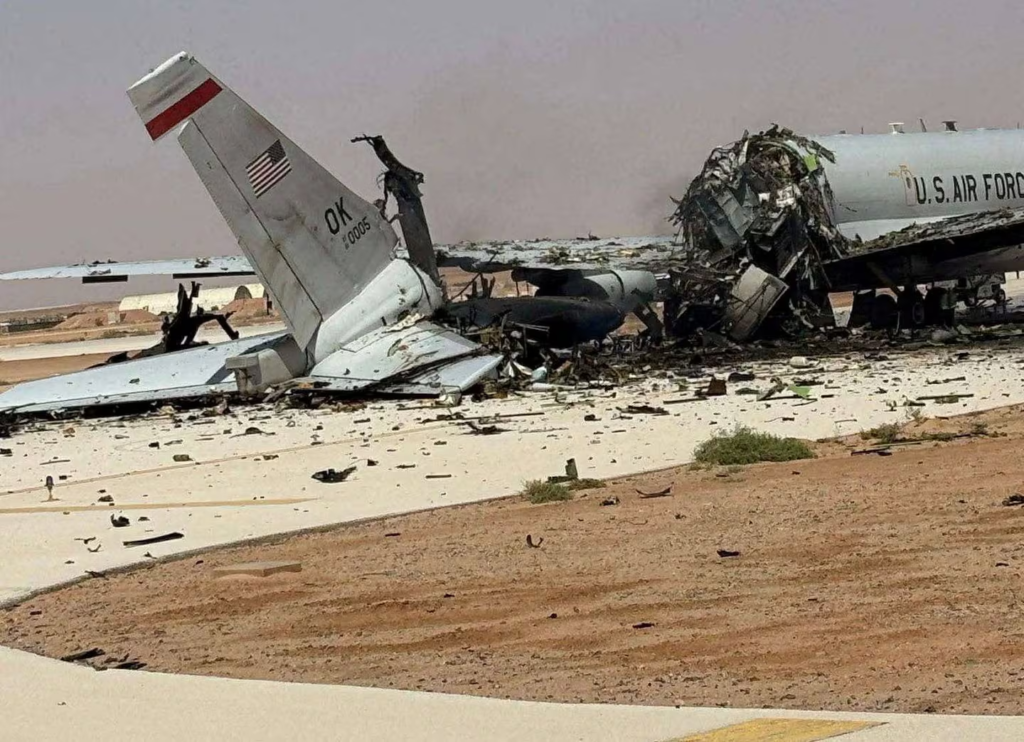
The CRS is an independent research center that provides information to Congress. It used data from the Department of Defense and U.S. Central Command, as well as news reports, to compile a picture of the actual losses of military fixed-wing and rotary-wing aircraft, both piloted and unpiloted.
The operation covered major incidents, including the downing of a Strike Eagle, which necessitated a crucial search and rescue mission in early April, as well as friendly fire involving three other F-15E Strike Eagles over Kuwait.
In 1998, each of these aircraft cost approximately $30 million, equivalent to about $65 million today.
The United States also destroyed two MC-130J Commando II aircraft, valued at $114 million each, used for special operations, during the rescue of the pilots.


During this search operation, an HH-60W Jolly Green II search and rescue helicopter was damaged by ground fire while flying over Iran. Each helicopter costs more than $40 million.
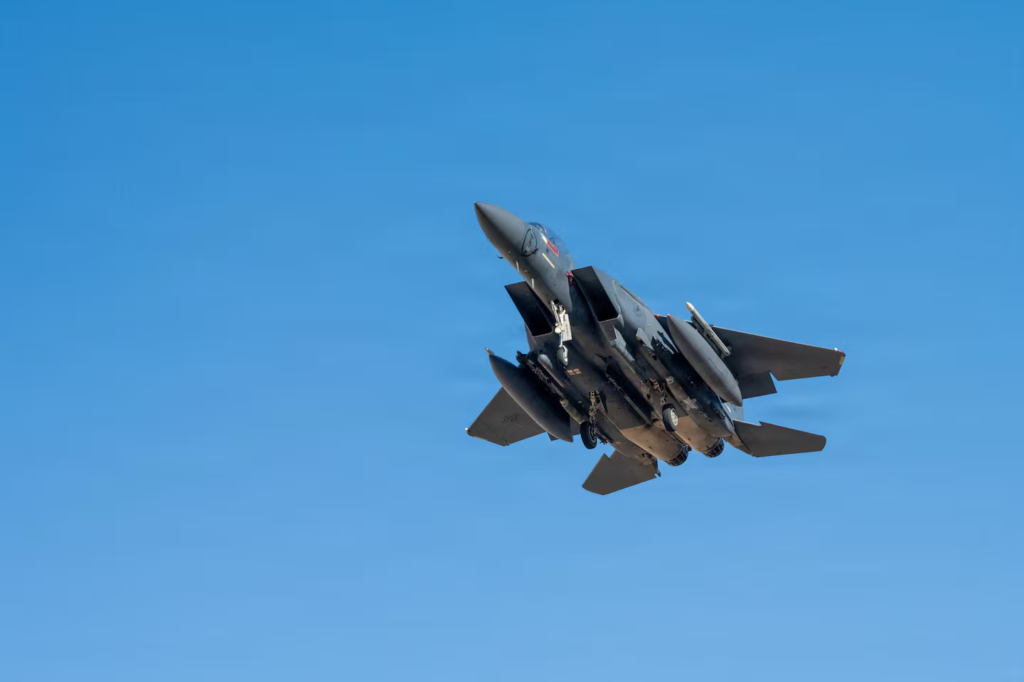
A multirole stealth fighter, an F-35A Lightning II, estimated to cost around $100 million, was also damaged, and an A-10 Thunderbolt II, valued at $20 million and used for close air support, was destroyed.
The report also mentions losses or damage to seven KC-135 Stratotanker tankers, valued at $70 million each and used as in-flight refueling stations, as well as an E-3 Sentry AWACS airborne early warning and control radar, which the Wall Street Journal estimates would cost $700 million to replace. The United States operates just over a dozen of these aircraft.
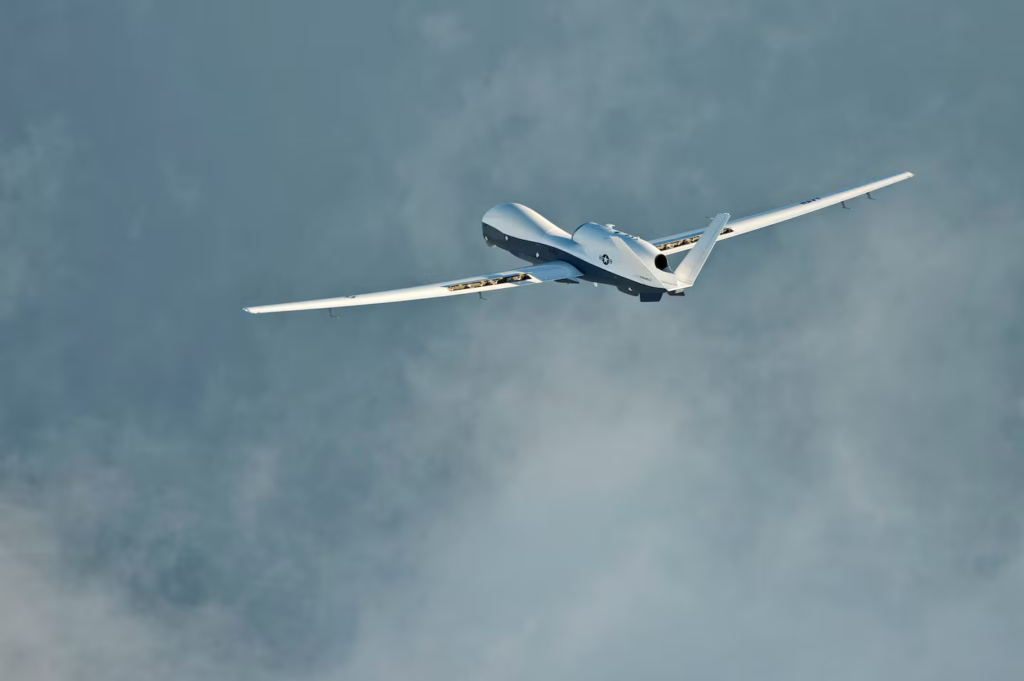
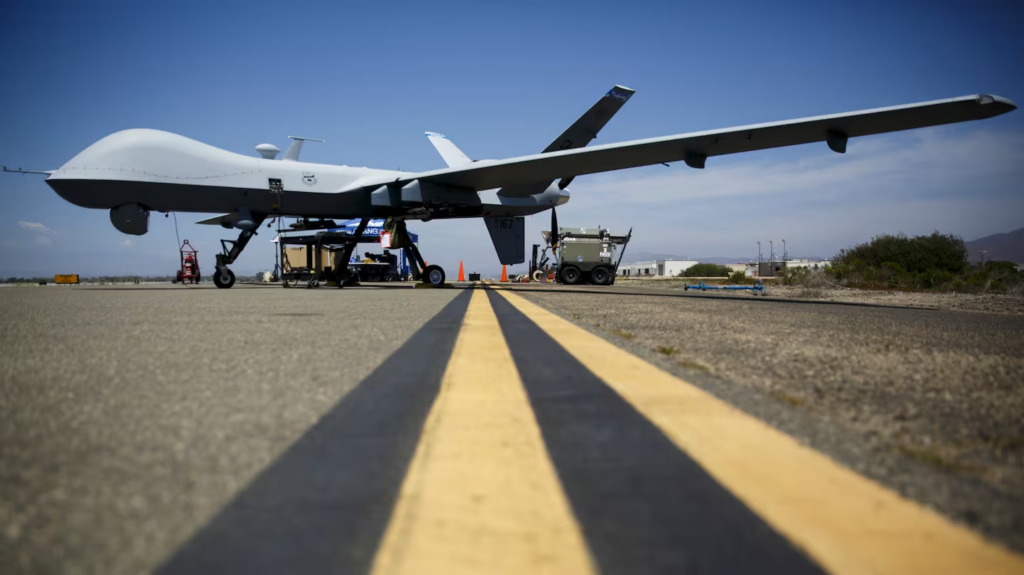
Losses were also recorded for 24 MQ-9 Reaper drones, valued at $30 million each, and one MQ-4C Triton drone, valued at $240 million, used for reconnaissance and surveillance. The Triton drones are so expensive that only 20 were ever produced.
In April, Pentagon officials told Congress that $25 billion had already been spent on combat operations, though Democratic leaders believe the actual figure is likely much higher.
On May 12, Acting Defense Department Comptroller Joels Hearst said the cost had reached $29 billion, stating, “A significant portion of this increase is due to inaccurate cost estimates for repairing or replacing equipment.”
U.S. officials with access to internal assessments told CBS News that the actual cost of the offensive to date is closer to $50 billion.
During his testimony before Congress in April, Secretary of Defense Pete Hegseth adopted a hard line.
He stated: “The greatest challenge, the greatest adversary we face right now, is the reckless, irresponsible, and defeatist rhetoric of Democrats in Congress and some Republicans.”
In addition to aircraft losses, 13 service members were killed in action, including six aboard a Stratotanker tanker that crashed in allied territory.
More than 350 Americans were also wounded, amid widespread anger over the inadequacy of measures taken to protect troops in combat zones.
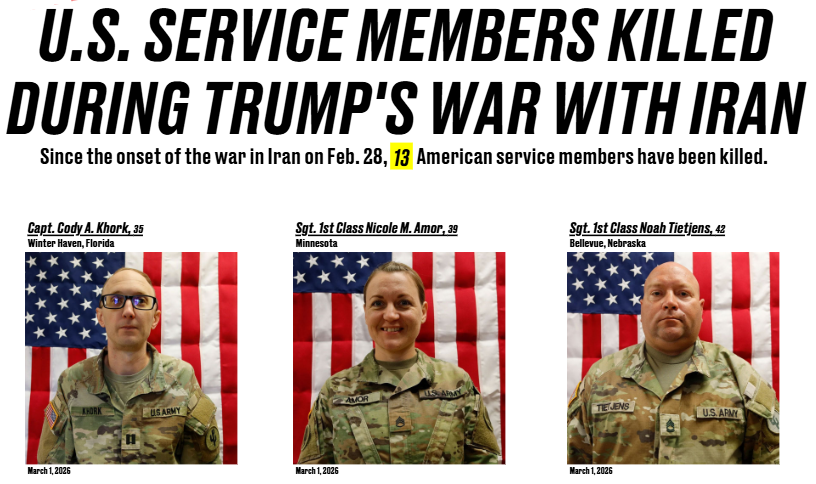
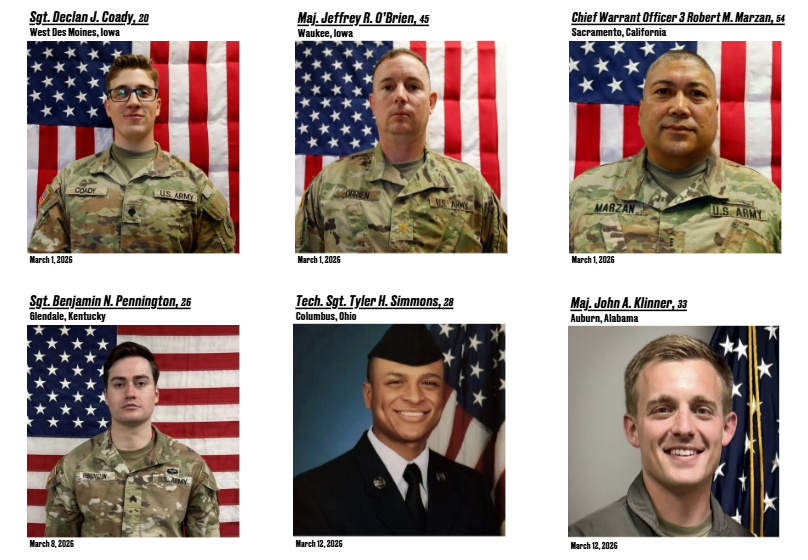
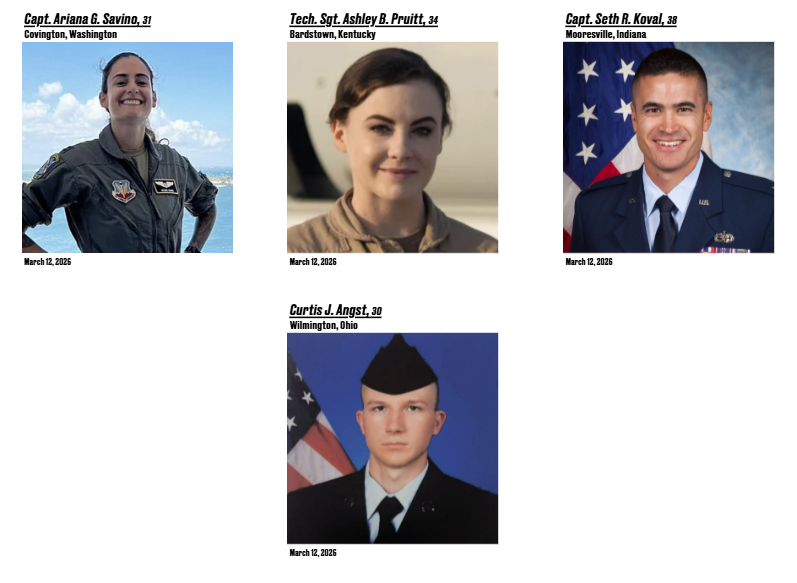
An airstrike on March 1st at the port of Shuaiba, Kuwait, killed six U.S. service members, including Staff Sergeant Nicole Amour.
Survivors have questioned the effectiveness of drone defenses in mitigating risks, and a recent interview with CBS News revealed that additional medical supplies had been requested in the weeks leading up to the strike.
“It was a failure,” Major Stephen Rumsbottom told CBS News, commenting on Amour’s death. “She could have been saved. She fought hard until the very end and did everything she could to survive.”
Captain Tim Hawkins of U.S. Central Command told CBS News, “No plan is perfect, but the allegations of blatant disregard for the safety of our forces are baseless and inaccurate.” »
Meanwhile, the Iranian Ministry of Health announced that 3,468 people, ranging in age from eight months to 88 years, have been killed in Iran.