
Pentagon Pete’s Secret Plot Against Top General Exposed
The military is preparing to bring criminal charges against a general Hegseth fired last month.

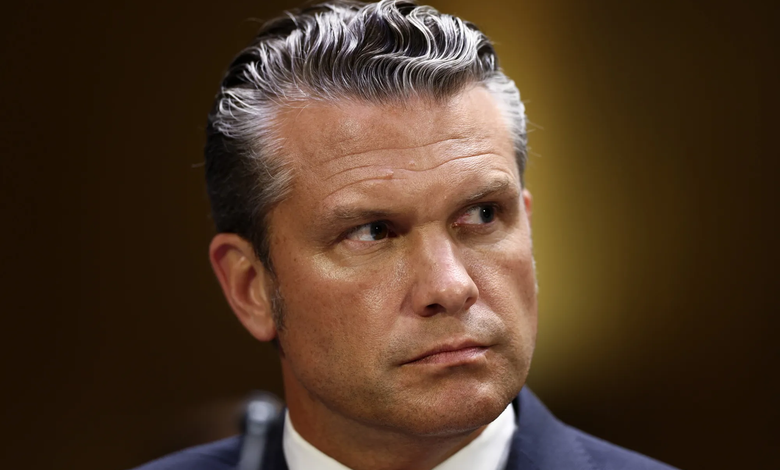
The Pentagon is intensifying its campaign against individuals suspected of leaking classified information, taking stern action against a general previously removed from his post—a move intended to serve as an example.
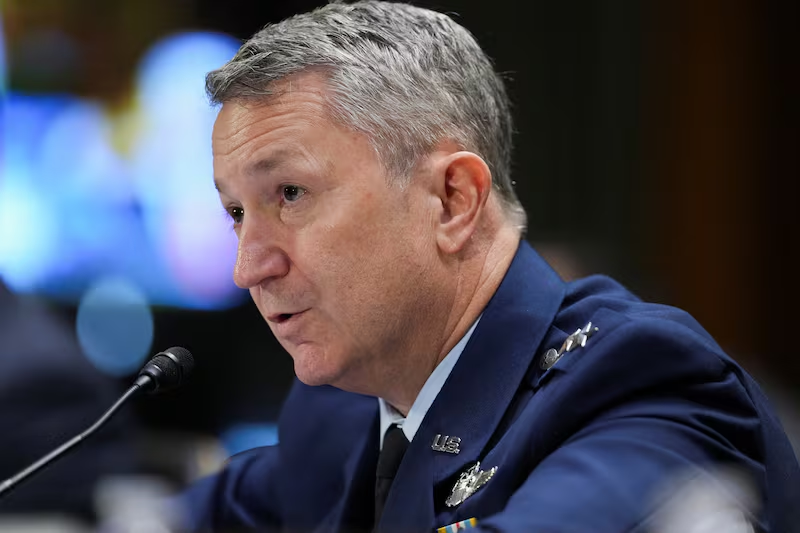
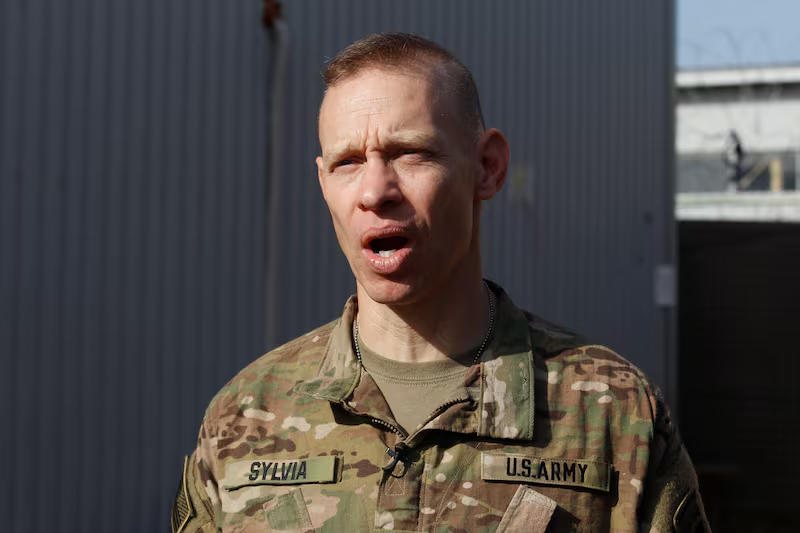
According to The Washington Post, the military establishment is preparing to pursue criminal charges against Lieutenant General Brett Sylvia, a high-ranking officer whom Secretary of Defense Pete Hegseth removed from his position last month.
This case reflects a particularly aggressive approach—even by the standards of the Trump administration—aimed at punishing senior military officials for sharing information with journalists.
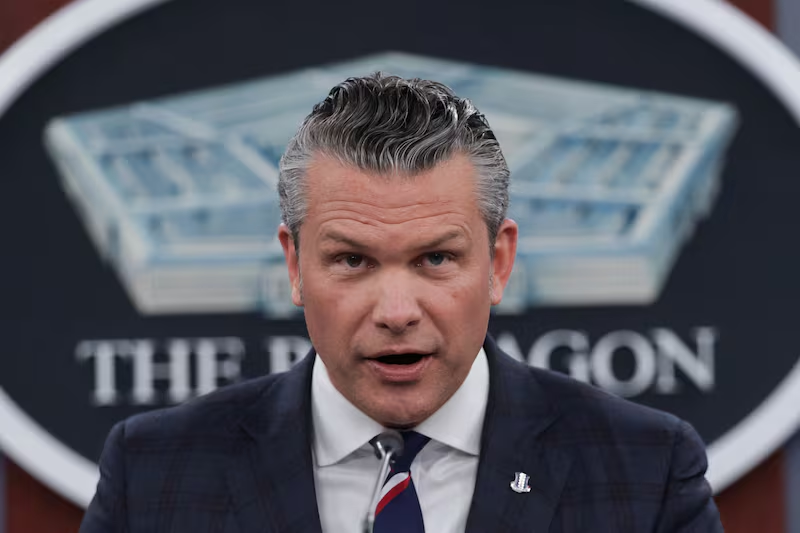
Sylvia, 54, was serving under the Chairman of the Joint Chiefs of Staff, General Dan Kane, as the Director for Plans and Policy.
However, Secretary of Defense Pete Hegseth removed him from his post in October, accusing him of leaking classified information and subsequently deleting conversations held via the messaging app “Signal.” Hegseth has also referred the matter to the Department of Justice to determine whether criminal prosecution is warranted.
The Washington Post further reports that the case has been submitted to the Acting Secretary of the Army, Adam Tilly, who is tasked with evaluating whether to initiate military disciplinary proceedings.
Pentagon officials have made no secret of their intent to penalize Sylvia.

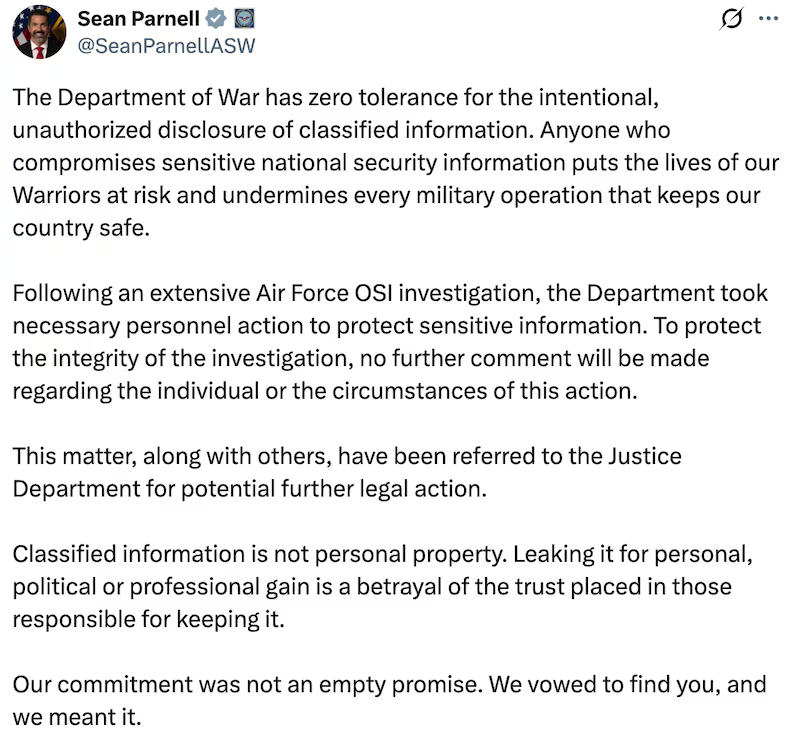
Following the news of Sylvia’s dismissal, Sean Parnell, a senior spokesperson for Hegseth, wrote on social media: “Our commitment was not an empty promise. We vowed to find you, and we meant it.”
However, questions remain regarding the prosecution’s ability to build a solid case against Sylvia, especially since no official charges have been brought against him by the government to date. It is worth noting that a previous attempt by Hegseth to penalize individuals suspected of leaking information from within the Pentagon yielded no results after the matter was referred to the Department of Justice.
Furthermore, the Department of Justice has not confirmed whether it is conducting an investigation into the allegations against Sylvia. In a brief statement to The Washington Post, it merely indicated that “investigations are underway regarding potential leaks of classified information” and that it is working in close coordination with its “partners within the government,” including the Department of Defense.
It also remains highly unclear what exactly Sylvia is accused of having done, and whether a conviction is, in reality, even a possibility.
Sources familiar with the matter told The Washington Post that it is not certain Sylvia actually passed information to a journalist. They suggest the possibility that he may have only provided general information, thereby avoiding the disclosure of confidential details—a common practice among senior military officials. These same sources added that the deletion of a conversation on the app “Signal”—where the exchanges allegedly took place—does not, in itself, constitute proof.
Nevertheless, even if the government or the military were to fail in securing a conviction, Franklin Rosenblatt, a retired officer, told The Washington Post that the mere act of subjecting military officials to such pressure and intimidation could, in itself, be the intended objective.
“In many national security cases that have arisen recently—during Trump’s second term—it could be said that the process itself constitutes the punishment,” Rosenblatt stated.