
Pentagon Pete Busted Handing $400M to Fraud Firm
Navy officials agreed that a severe punishment was “not necessary.”


Under Pete Hegseth’s tenure, the Department of Defense granted a contract extension—potentially worth up to $400 million—to an arms manufacturer that had previously admitted to committing fraud against the government.
The platform “PunchUp“—a newsletter affiliated with “The Daily Beast”—reported that Raytheon secured this major contract just one month after officials decided not to suspend the company, despite its past misconduct.
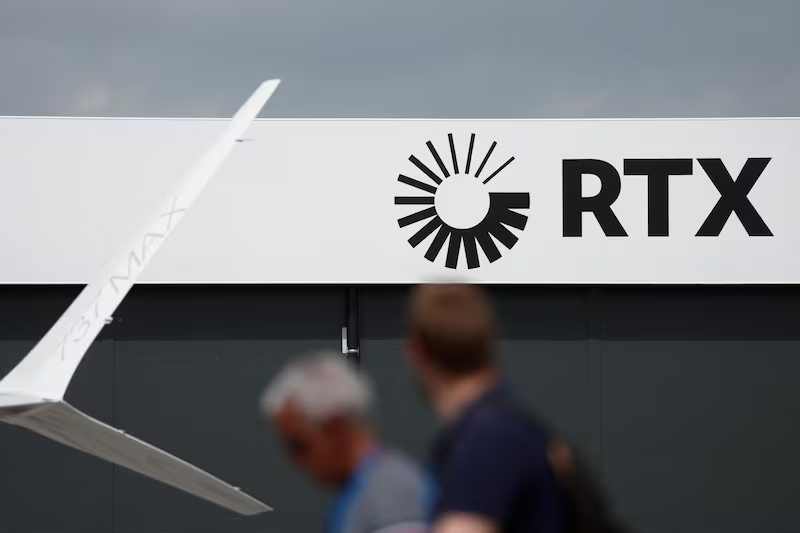
Last week, the Pentagon announced that the Missile Defense Agency had awarded a two-year, no-bid contract extension—valued at up to $394 million—to this subsidiary of the military-industrial giant RTX for the maintenance of government radar systems; $112.3 million of that total has already been allocated.
This decision comes just one month after RTX announced that the U.S. Navy had decided to maintain Raytheon’s eligibility to receive government contracts. This comes despite the company’s 2024 admission that it had inflated the price of a radar maintenance contract with the Air Force by $11.1 million during 2017 and 2018.
Furthermore, the same company admitted to committing fraud totaling $100.1 million in connection with “Patriot” missiles, under a separate contract with the Army in 2011 and 2012.
In a press release issued at the time, the Department of Justice stated: “These frauds caused the Department of Defense to pay Raytheon more than $111 million in excess of what should have been paid under these contracts.”
Following this admission, Raytheon entered into a “deferred prosecution agreement” regarding the radar and missile-related fraud; the prosecution agreed to forgo further legal action, provided the company remained under strict government oversight for a period of three years.


The agreement, reached in 2024, states: “As a result of the fraud committed by Raytheon during the negotiations and award of the contract (FOS2), the U.S. Air Force agreed to a contract price that was fraudulently inflated by $11,072,009.”

According to federal documents submitted by the company RTX and reviewed by the platform “Punch Up,” U.S. Navy officials determined in September of this year that “suspension or debarment actions are not necessary to protect the interests of the U.S. government.”
On October 13, the U.S. Navy awarded Raytheon a new order, valued at $15.1 million, for the supply of spare parts for radar systems under an existing agreement.
Eight days later, the Pentagon announced a $394 million contract extension with the Missile Defense Agency.
This new contract ensures the continued collaboration between Raytheon and the Missile Defense Agency through 2028, with the company set to conduct operations both within the United States and abroad.
In a statement, the Pentagon noted: “This modification provides for a two-year extension—on a sole-source basis—and increases the contract ceiling from $2,605,033,000 to $2,999,033,000.”
The statement added: “The original contract was awarded on a sole-source basis. Under this extension, Raytheon will continue operations and provide maintenance support for AN/TPY-2 radar systems—mobile radars used by ground and naval forces—through a combination of contract types, including cost-plus-incentive-fee, cost-plus-fixed-fee, and firm-fixed-price arrangements.”
A smaller-scale agreement, concluded with the Navy on October 13, concerns the supply of spare parts for AN/SPY-1 and AN/SPY-3 radar systems, which are primarily used aboard ships for target tracking and missile defense.
Furthermore, the U.S. Department of Defense (the Pentagon) has awarded Raytheon two major contracts in the missile sector this month: the Navy signed a contract with the company on October 1, potentially worth up to $24 billion, while the Missile Defense Agency announced another contract on October 8, valued at up to $6.3 billion.
Raytheon has maintained a close and enduring relationship with the Pentagon, even following the disclosure of fraud cases involving the company. Prior to this recent expansion, the financial ceiling of the contract between the company and the Missile Defense Agency had been raised by $900 million—just nine days after the U.S. Department of Justice announced in 2024 that it had reached a “deferred prosecution agreement” with the firm.
At the time, this increase brought the contract ceiling to $2.6 billion. Since then, the U.S. Navy has awarded Raytheon potential contracts worth billions of dollars for the supply of radar systems and missiles.
In a statement to “The Daily Beast,” a spokesperson for the Missile Defense Agency asserted: “In accordance with Part 9 of the Federal Acquisition Regulation, the Agency rigorously evaluates the responsibility and eligibility of a contractor before entering into any contract.” »
The spokesperson added: “Given that the contractor was not subject to any suspension or debarment measures, and that this acquisition meets essential requirements related to the Agency’s missions, the Missile Defense Agency proceeded with this extension.”