
Elon Musk Made Off With $16 Billion of Taxpayer Money
In theory, contractors are legally barred from political giving because that smacks of bribery. In practice, Musk gets a 2200 percent return on his investment.

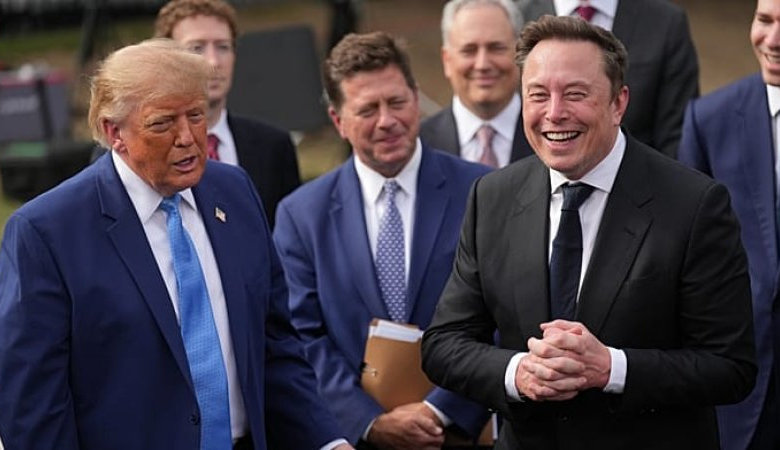
Did you know that there is a law prohibiting federal government contractors from making campaign contributions to a political party, committee, or candidate for federal office? Don’t feel bad if you weren’t aware of it; it seems that Elon Musk himself is unaware.
CNN money and politics reporter Fredreka Schouten described Musk on October 26 as “a mega-donor unlike anyone this country has ever seen.” He’s spent more than $445 million on the midterm elections, which is more than anybody ever spent on an election where the donor was not himself a candidate. That doesn’t count the $291 million Musk spent two years ago to elect Trump and other Republicans.
In addition to his role as a major donor, Musk is also a key federal government contractor, primarily through his aerospace company, SpaceX. According to a new report from “Democracy Defenders Action”—a non-profit legal group co-founded by Norm Eisen, who served as associate counsel to the House Judiciary Committee during the first impeachment of Donald Trump—Musk has secured “at least $10 billion in contracts since he left the government.” This occurred just 17 months ago, amid a period of intense friction with the president—a conflict that received extensive media coverage. These $10 billion are in addition to the $38 billion that Musk secured from the federal treasury prior to 2025. Furthermore, this figure does not include the $6.3 billion he raked in while leading the “Department of Government Efficiency” (DOGE) under the Trump administration. Far from reducing public spending, this department actually led to a $517 billion increase in expenditures—a figure that accounts for neither the $6.3 billion gained through federal contracts during that period nor the $10 billion obtained subsequently. With adversaries like these, who needs friends?
It is hard to imagine a more extreme example of the questionable practices that Congress believed it had outlawed as far back as 1940. Harry Byrd, the senator from Virginia who initiated this measure—introduced as an amendment to the 1939 “Hatch Act”—argued that government contractors should not make campaign contributions; such donations, he explained, “could, in some instances, be tantamount to bribes to secure government contracts.” Congress later strengthened this prohibition after the Watergate scandal revealed that officials from the Nixon campaign had interfered in the awarding of architecture and engineering contracts by the General Services Administration (GSA). The U.S. Court of Appeals for the D.C. Circuit subsequently upheld the validity of this ban in 2015.
Elon Musk invested $736 million in Trump’s second term and, in return, received $16.3 billion. …amounting to a 2,200% return. So, why isn’t this man in prison? The reason is that when the contracting party in question is a corporation—which is the most common scenario—its executives, board members, major shareholders, and affiliated political action committees (PACs) remain free to fund federal elections. Furthermore, this prohibition does not cover so-called unlimited “independent expenditures” made by “Super PACs”—such as Musk’s “America PAC,” which accounts for roughly half of his spending. These are legal loopholes wide enough to drive a massive “Nicolas Tractomas” (Nicolas Tractomas TR 10×10 D100) truck through.
It’s especially galling that Musk is milking the same federal bureaucracy to which he took an axe in early 2025 (as are, I noted earlier this month, the Dwarf-Fortress-playing little creeps who worked under Musk at DOGE). Musk’s twin endeavors were not unconnected. The Democracy Defenders Action report notes that the federal government gave SpaceX exclusive access to its most closely-held space-tracking data only after DOGE “fired many of the federal government’s nascent space traffic control program’s staff,” citing an October 25 report by Tom Perkins in The Guardian. Indeed, DOGE fired all but one of the traffic control staff (presumably as insurance against an impoundment challenge in court). The all-but-certain next step will be for the federal government to privatize space traffic control entirely and hand it over to SpaceX. Democratic congressional investigators, take note.
The biggest contract awards, according to Democracy Defenders Action, are $4.2 billion and $2.3 billion to help the U.S. Space Force build Trump’s Golden Dome missile defense system. The Golden Dome is a replay of Ronald Reagan’s failed Star Wars program, inspired by the success of Israel’s Golden Dome, which covers an area approximately 1/450th the size of the United States. The contracts were approved under a fast-track process called “other transaction authority” that, according to Drew FitzGerald and Micah Maidenberg of The Wall Street Journal, zooms decision-making past “many of the regulations that typically slow the process for acquiring weaponry and other technology.” According to FitzGerald and Maidenberg, the Pentagon request “closely matched SpaceX’s capabilities.” Funny about that.
In a statement to Bloomberg, Dave Forland—who served as acting Deputy Assistant Secretary of Defense for space and missile defense policy under the Biden administration—asserted: “You should never decide in advance to award a contract to a specific company, and then write the criteria to fit that decision.” And, indeed, such a thing should absolutely not happen. Troy Meink, an official within the Department of the Air Force—which oversees the Space Force—maintains a close relationship with Elon Musk; a potentially problematic situation that was raised by Democratic Senators Elizabeth Warren and Tammy Duckworth prior to Meink’s confirmation. In fact, while Meink was a candidate for the position, Musk was present at his interview. In a statement to Joe Gould of Politico, Richard Painter—who served as the chief White House ethics lawyer during the George W. Bush administration—remarked: “I have never seen anything like this.” A remark that now frequently echoes through the corridors of Washington.
The benefits granted to Elon Musk by the Trump administration extend beyond mere federal contracts; according to a report by the organization “Democracy Defenders Action,” regulatory accommodations tailored specifically for Musk’s companies could prove even more significant. The organization notes that “at least 11 of the 15 federal executive departments have taken actions that are favorable to Musk’s business operations, or that could prove useful to them in the future.” The report cites comments made last August to The Wall Street Journal by Todd Harrison, a defense analyst at the American Enterprise Institute: “There’s been a lot of focus on the contracts they’ve won, but, in the broader picture, the regulatory wins have more fundamental and long-lasting implications for Musk’s business model.”
As an example, Reuters reported in July that “xAI”—an artificial intelligence company linked to SpaceX—somehow secured authorization to install 59 natural gas-powered turbines at a data center in Memphis, all “without obtaining federal air quality permits.” Nearly all of these turbines—save for two—were installed just across the state line in Mississippi (Memphis is located immediately north of the Tennessee border). Regulatory authorities in Mississippi incorrectly claimed that these turbines were exempt from the Clean Air Act. Consequently, the NAACP (National Association for the Advancement of Colored People) filed a lawsuit on behalf of low-income Black communities living in the vicinity, seeking to compel the Environmental Protection Agency (EPA) to enforce the law.
For example, Reuters reported in July, Musk’s Artificial Intelligence company xAI, a unit of SpaceX, was somehow permitted to install 59 natural gas turbines for a Memphis data center “without securing federal clean air permits.” All but two of the turbines were situated across the state line in Mississippi—Memphis sits just north of the Tennessee border—and Mississippi state regulators claimed, erroneously, that the turbines in question were exempt from the Clean Air Act. The NAACP filed suit, on behalf of nearby low-income Black communities, to compel the EPA to enforce the law. The Trump Justice department then threw the federal government’s weight behind xAI, claiming, absurdly, that “The NAACP may not pursue this Clean Air Act enforcement action over the United States’ objection.” It cited for justification a Trump executive order that said: “It is the policy of the United States to sustain and enhance America’s global AI dominance in order to promote human flourishing, economic competitiveness, and national security.” On October 19, a district court judge in Mississippi called bullshit on that and denied the Trump administration’s attempt to dismiss the NAACP challenge.
Another example was the Securities and Exchange Commission’s settlement of a complaint the SEC had brought against Musk in the final days of the Biden administration for delaying disclosure of his Twitter share purchases in advance of acquiring the company. The delay allowed Musk to buy additional shares at an artificially low price. It was a straight-up securities violation, and the SEC initially demanded that Musk pay a $150 million fine. But after Trump took office the agency agreed to instead settle the matter for $1.5 million.
Amanda Fischer, former chief of staff to Gary Gensler—chair of the Securities and Exchange Commission (SEC) under the Biden administration—told Reuters: “This is a shameful day for the SEC.” She added that this settlement “should lead the public to wonder whether the agency is protecting those close to the White House at the expense of ordinary investors.” District Judge Sparkle L. Sooknanan appeared to share this sentiment while reluctantly approving the settlement. She wrote: “A court presented with a consent judgment is not merely a rubber stamp, but neither is it an independent overseer or ombudsman. Whether the executive branch—through the SEC—has done enough to hold Mr. Musk accountable for his alleged violations is a question that, like many others, is left to the judgment of the citizenry at the ballot box.” As I have previously pointed out, the November 3 election serves as much as a referendum on Musk as it does on Trump.
The organization “Democracy Defenders Action” has acknowledged that certain decisions made by the Trump administration ran counter to Musk’s financial interests. These include the elimination of a tax credit for the purchase of new electric vehicles—a credit that Biden had, in fact, expanded—as well as environmental policy decisions that eased restrictions on vehicles powered by traditional fuels. It is well known that Musk serves as the CEO of Tesla, a giant in the electric vehicle industry. However, the organization pointed out that this situation was not without its upsides for Musk: as traditional automakers retreated from the electric vehicle market due to these policies, Tesla managed to grow its market share from 41% to 52%. Similarly, while the tariffs imposed by Trump did harm Tesla, they weighed far more heavily on many of its competitors. The “senseless” trade war launched by Trump against Canada—which included the threat of a 50% tariff on Canadian-made vehicles and parts—would likely have caused serious damage to General Motors and Ford; Tesla, by contrast, has no factories in Canada and is far less dependent on the country for its supply of parts.
As for whether these relatively less damaging outcomes should be viewed as a “regulatory return” on the $736 million that Musk invested in Trump and the Republican Party, I will leave that judgment to more dispassionate observers. In any case, it seems to me that Musk is satisfied with this “transaction.” Let us hope that the midterm elections prompt him to ask for his money back.