
Trump’s agricultural tariffs hit all 50 states—driving up food prices, crushing exports, and leaving farmers with nowhere to turn
The sweeping tariffs trigger nationwide economic strain, squeezing consumers and pushing American farmers deeper into crisis as global markets slip away.

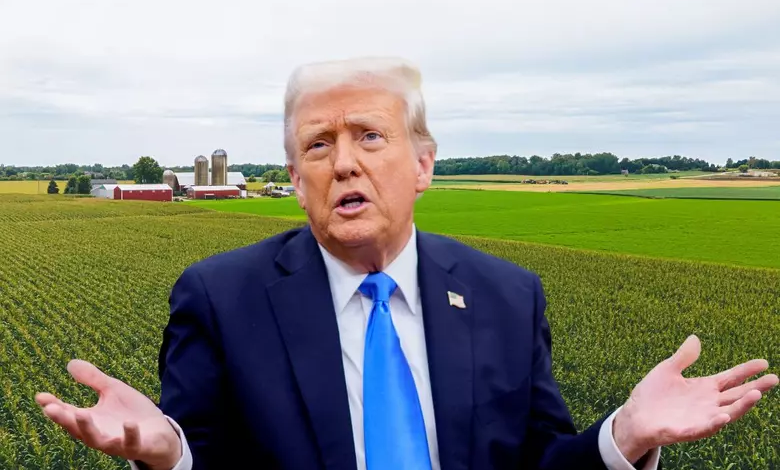
When the Trump administration launched its 2025 tariff campaign, its most vocal critics focused on the consequences for farmers in the Midwest and border states. A year later, the impact of these tariffs is increasingly evident, and some studies suggest that no state has emerged unscathed.
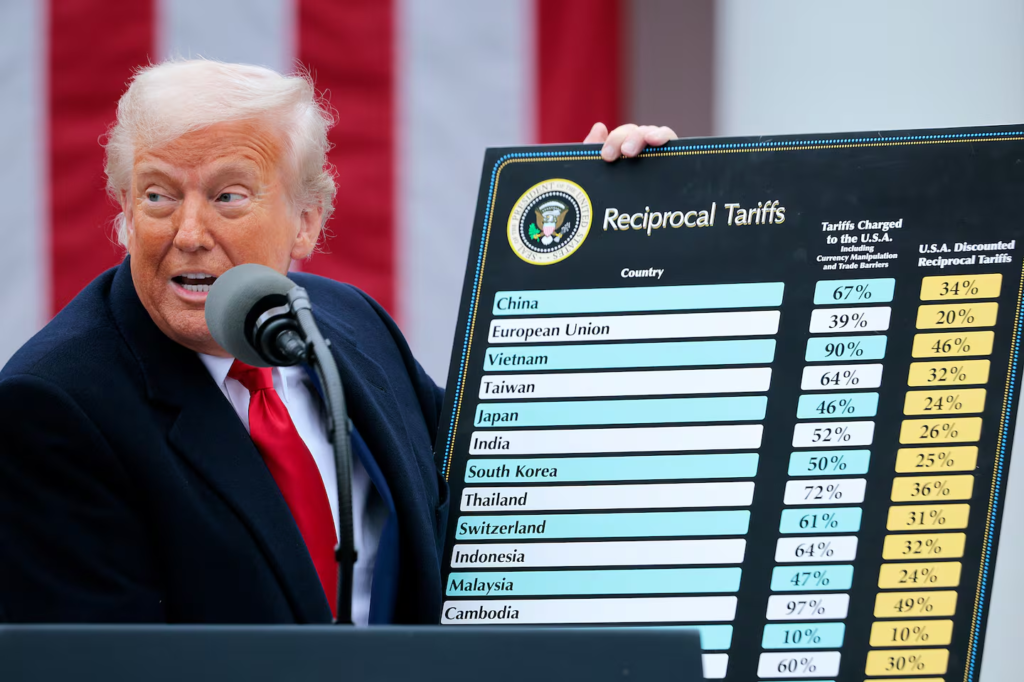
Early last year, the Trump administration imposed one of the most sweeping tariff regimes in the nation’s history, including a 10% tariff on all goods and country-specific tariffs, reaching as high as 50% in some cases. It was widely expected that these tariffs would have a significant impact on the economy. But while some observers assumed that the immediate damage would be limited to agricultural producers or states heavily reliant on international supply chains, the shock has proven to be far more widespread.
Trump’s tariffs have exposed 50 different trade loopholes across the country, each defined by production and consumption patterns specific to each state, according to a study published last week by researchers from Ohio State University and Cornell University. By the end of 2025, even states that had never relied on imports were beginning to feel the effects of the tariffs.
A rigorous study published by the Association for Agricultural and Applied Economics analyzed where and how goods are produced, shipped, and consumed in each U.S. state.
The researchers concluded that the tariffs caused “immediate shocks” for net importers, who suddenly found themselves bearing the brunt of the payments. The consequences were swift for states that depend on agricultural exports, as U.S. trading partners quickly retaliated. Even states that neither import nor export large quantities of goods ultimately had to pay the price of tariffs in the form of higher food prices, as farmers began passing the costs on to consumers.
“U.S. agricultural trade isn’t limited to just one type of product; it encompasses 50 different ones,” said Wendong Zhang, an economist at Cornell University and co-author of the study.
Some for everyone
Last year’s tariffs had a domino effect, gradually intensifying and impacting more and more sectors of the U.S. economy. Initial indications suggested that U.S. businesses and importers bore the brunt of the impact. Large retailers, in particular, were able to absorb most of the additional costs, with minor repercussions for consumers, by placing orders before the tariffs took effect and reducing their inventories.


But it was clear from the outset to consumers that the impact was most pronounced. Small businesses with limited resources were among the first to raise their prices, followed later by large corporations like Amazon, Walmart, and Target. By 2026, American businesses and consumers were expected to bear nearly 90% of the cost of tariffs, according to a Federal Reserve study.
A study conducted by Cornell and Ohio State Universities found that the knock-on effects were felt most acutely in export-dependent agricultural and coastal states. Trading partners, including Canada and China, responded to the Trump tariffs with retaliatory measures that severely damaged the economies of these U.S. states.
For example, according to Ag America, a company specializing in agricultural finance, agricultural exports to China fell to $5.5 billion in the first half of 2025, compared to $12 billion in 2024. This decline is mainly due to a sharp drop in Chinese purchases of American soybeans, which has plunged tens of thousands of American soybean producers into the throes of an intensifying trade war.
The repercussions of punitive tariffs are not limited to the staple crops of the American Midwest. The study’s authors found that Canada’s strict measures on U.S. alcohol imports have significantly impacted Kentucky and Tennessee, two states with major bourbon and whiskey industries that export substantial quantities. The U.S.-Canada trade war has also dealt a severe blow to exporters in the Northeast, where states previously exported about two-thirds of their processed grains, non-grain crops, livestock, and live fish to Canada.
Furthermore, the blockade of international trade has not improved the standard of living for Americans. Faced with rising costs for animal feed, fertilizers, and farm equipment, farmers are now experiencing food price inflation in supermarkets across the country, according to the study.
With the anticipated rise in commodity prices, such as fertilizers, as a consequence of the Iran nuclear deal, and Trump’s determination to maintain his tariff policies despite Supreme Court orders to abandon the maximum tariffs he had imposed, all American consumers are likely to feel the effects of these increased food prices, regardless of where they live.
“When manufacturers face higher production costs, they pass those costs on to the consumer,” Zhang said. “Ultimately, a consumer shopping in New York will pay more for a product that comes from a trade dispute in Washington, even if New York’s exports are very small.”
According to the study, Trump’s trade regime could encourage U.S. trading partners to turn to other suppliers, thereby disrupting import and export flows across the country. Researchers have warned that, based on the annual consequences of imposing tariffs, a trade policy aimed at restricting importers could ultimately weaken and reshape the structure of regional economies at the national level.